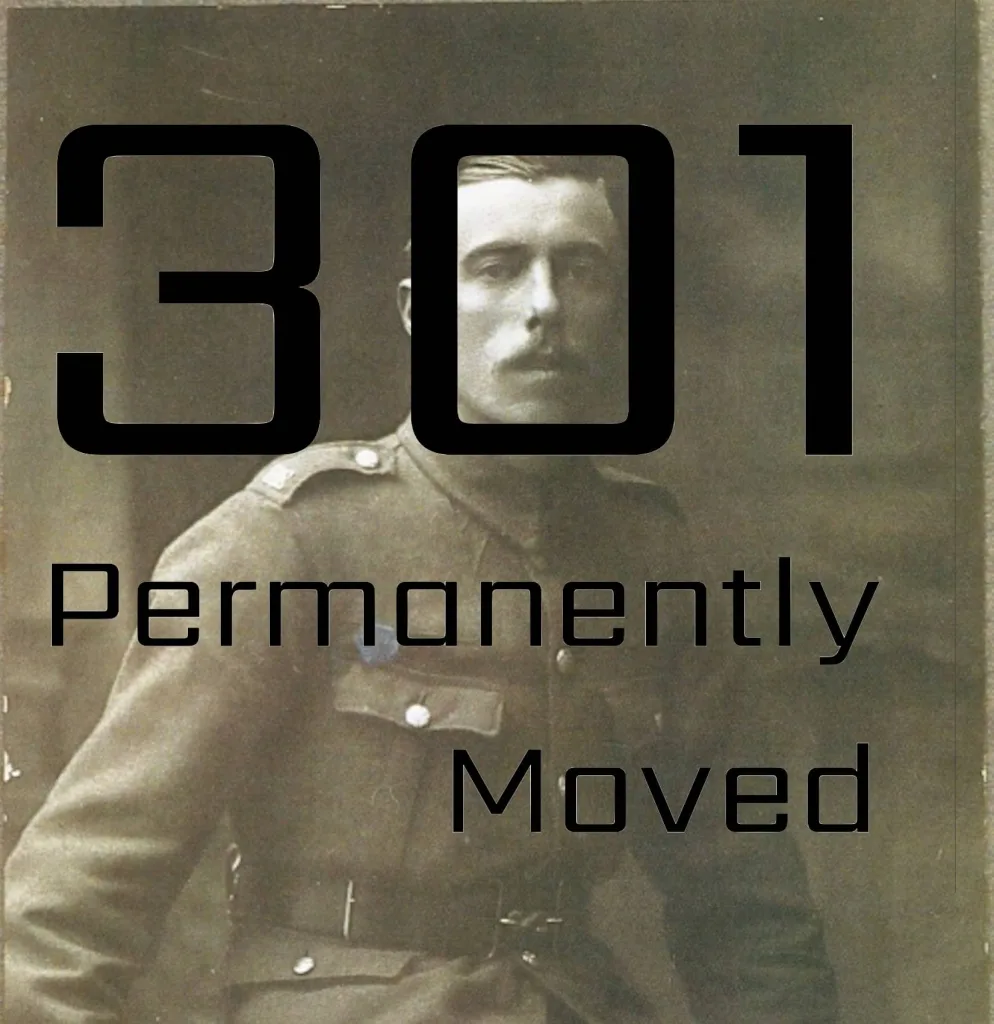

Catching up on the events of last week. Think I’m going to make a custom cover for every show moving forward too.
1 Thessalonians 4 13:18
13 But I would not have you to be ignorant, brethren, concerning them which are asleep, that ye sorrow not, even as others which have no hope.
14 For if we believe that Jesus died and rose again, even so them also which sleep in Jesus will God bring with him.
15 For this we say unto you by the word of the Lord, that we which are alive and remain unto the coming of the Lord shall not prevent them which are asleep.
16 For the Lord himself shall descend from heaven with a shout, with the voice of the archangel, and with the trump of God: and the dead in Christ shall rise first:
17 Then we which are alive and remain shall be caught up together with them in the clouds, to meet the Lord in the air: and so shall we ever be with the Lord.
18 Wherefore comfort one another with these words.
301 // Permanently Moved
Show Supporter 📻
Support the Show
Quarterly zine; my gift to you.
Remembrance
On the night of May 30th–31st, 1918, the Royal Engineers 255 Tunneling Company had set up camp next to the Poperinge-to-Boeschepe train line when it was bombarded. There were 35 casualties.
My great-grandfather, Henry John Springett, was among them. He was 26.
He and 14 of his comrades are buried in Lijssenthoek Military Cemetery.
Last week, my family and I traveled to Lijssenthoek Cemetery and the town of Poperinge in Belgium to commemorate 100 years since his death.
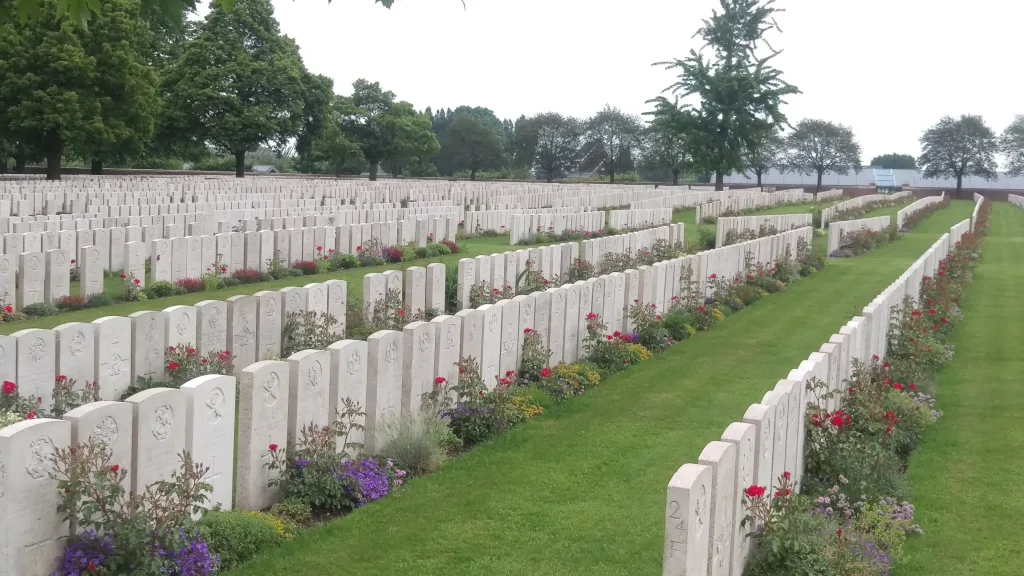
Last Thursday, my mum, dad, little brother, and my uncle Michael traveled to Lijssenthoek Cemetery in Belgium. We woke up at dawn and drove from Thanet to Folkestone to take the Channel Tunnel over to Calais and then continued on to Belgium. There were five of us in the car—my brother, my uncle Michael, and myself in the back. My brother was in the middle, and he just about survived the journey.
It was an extremely hot and humid day. Storms were due right at the time we were expected to arrive at the cemetery. On the way, we stopped at an extremely fancy chocolate shop and bought a couple of boxes. My parents, who visit Belgium once a year for the Christmas market, managed to get their sixth stamp on their customer loyalty card—so they’ll be using that for this year’s Christmas market.
When we arrived at the cemetery, we went straight to the visitor center rather than the cemetery itself. As we walked through the doors, there he was—on the TV screen.
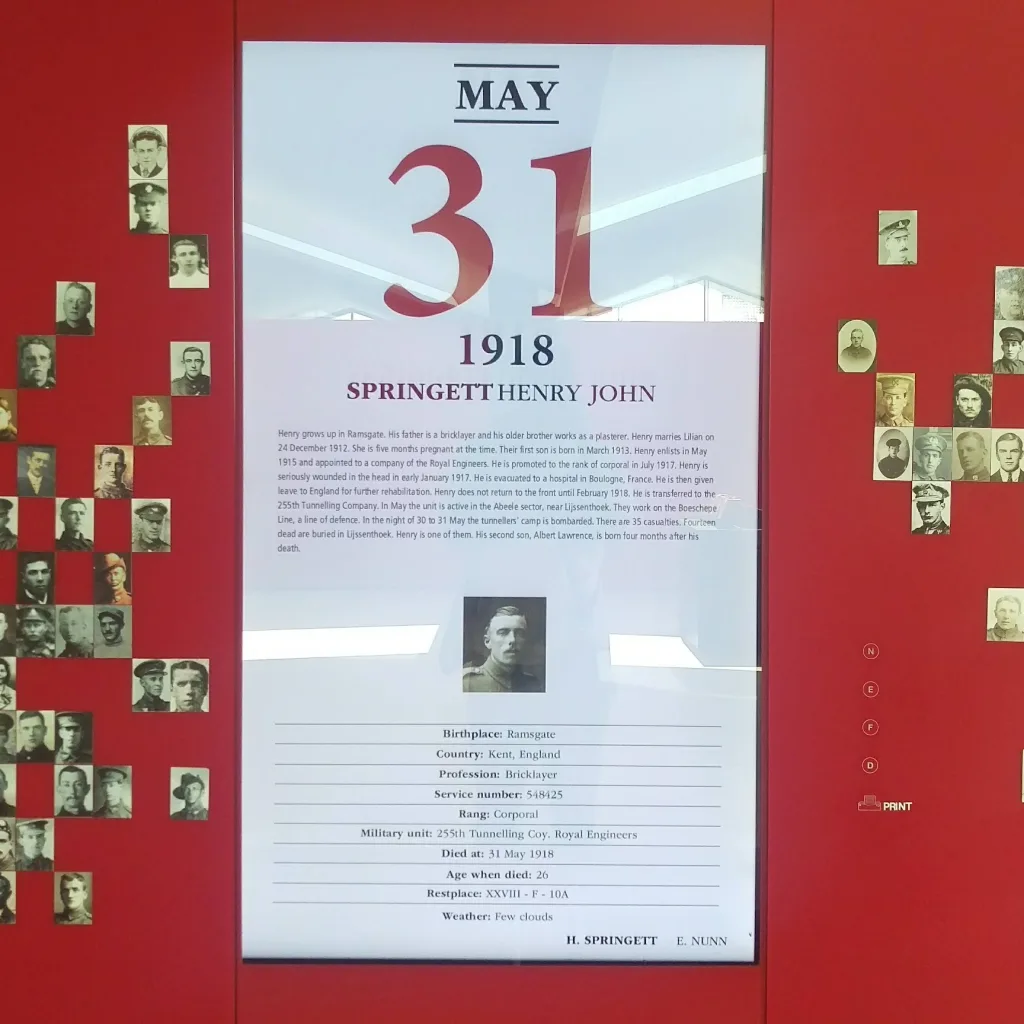
May 31st, 1918 – Springett, Henry John.
Henry grew up in Ramsgate, Kent. His father is a bricklayer, and his older brother works as a plasterer.
Henry marries Lillian on December 24th, 1912. She is five months pregnant at the time. Their first son is born in March 1913. Henry enlists in May 1915 and is assigned to a company of Royal Engineers. He is promoted to the rank of Corporal in July 1917.
Henry is seriously wounded in the head in early January 1917. He is evacuated to a hospital in Boulogne, France. He is then given leave to England for further rehabilitation. Henry does not return to the front until February 1918. He is transferred to the 255 Tunneling Company.
In May, the unit is active in the Abeele sector near Lijssenthoek, working on the Boeschepe line.
On the night of May 30th–31st, the tunnelers’ camp is bombarded. There are 35 casualties. Fourteen are buried in Lijssenthoek. Henry is one of them.
His second son, Albert Lawrence, is born four months after his death. Albert Lawrence, or Laurie, is my grandad.
It’s absolutely surreal to walk into a building in a different country and see a member of your family on a screen, on the TV—especially when they look like you, your brother, your dad, and your grandad. And further to that, none of the people listed ever knew or met him.
We had always thought that Great Uncle Owen was born in 1914—a four-year gap between him and my grandad. But last week, we learned he was actually born in 1913. There’s nothing quite like a 100-year-old clerical error.
It also may explain Great Uncle Owen’s “big smoky bonfire,” as the family refers to it—the time when he burned a lot of family documents.
Because Henry John was listed on the TV screen, we were able to print out the details of his grave’s location. So we did, and then we headed into the cemetery.
I don’t know if you’ve ever been to a war grave cemetery, but the sight of row upon row of white headstones is remarkable. Lijssenthoek is relatively small compared to some of the others, but it still took us a while to find his gravestone.
28F, 10A.
And there it was—relatively unadorned, with some roses growing in front of it.
548425, Corporal Henry John Springett, Royal Engineers, 31st of May, 1918, age 26.
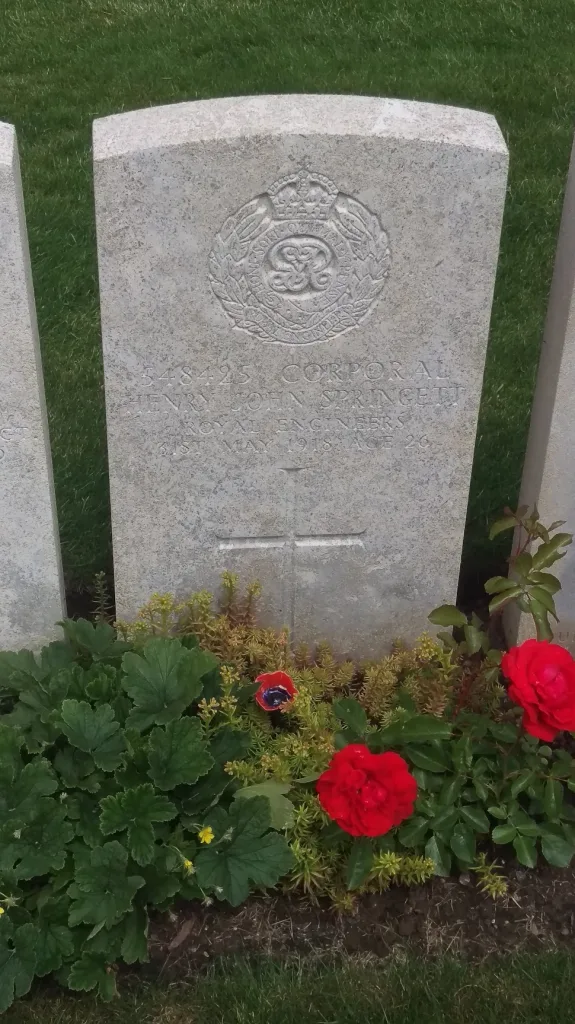
A cross was engraved beneath his name.
My mum placed a ceramic poppy in front of it, among the roses. My dad had brought Henry John’s pocket watch—the one he was given as a wedding present. He had it restored. He kept it in his pocket the whole time and only showed me later, as we were walking away from the grave.
My Uncle Michael said a few words, and I read 1 Thessalonians 4:13–18. I read it from my Great Uncle Owen’s King James Bible. It had once belonged to his mother—Henry John’s wife, Lily.
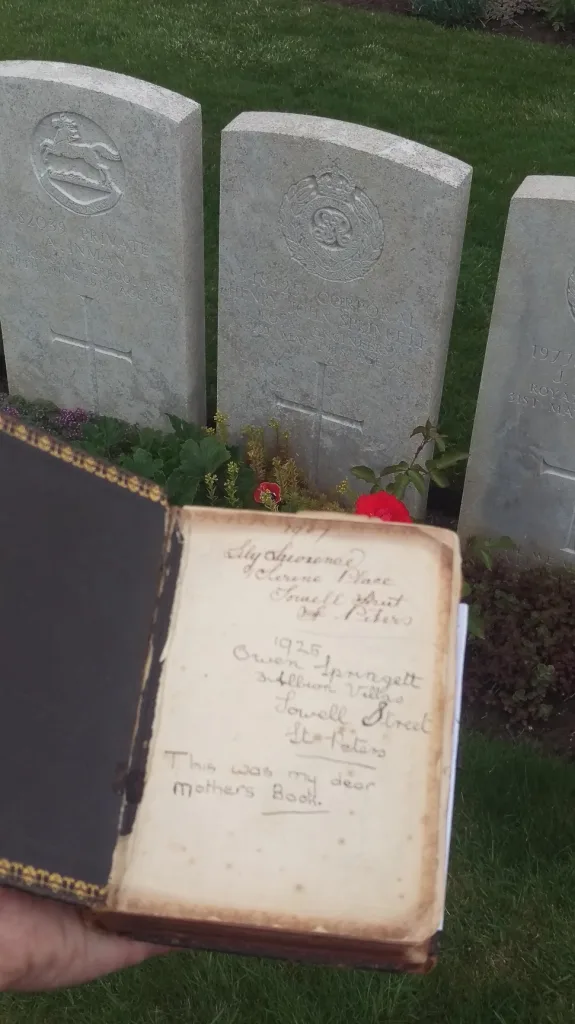
At some point, Owen had written in the front: “This was my dear mother’s book.”
It was given to her in 1907, and then to him in 1925. Both entries shared the same address—Soul Street, St. Peter’s—the house where my grandad grew up.
After we finished paying our respects, we walked through the cemetery to find the infographic fence that runs the entire length of the grounds.
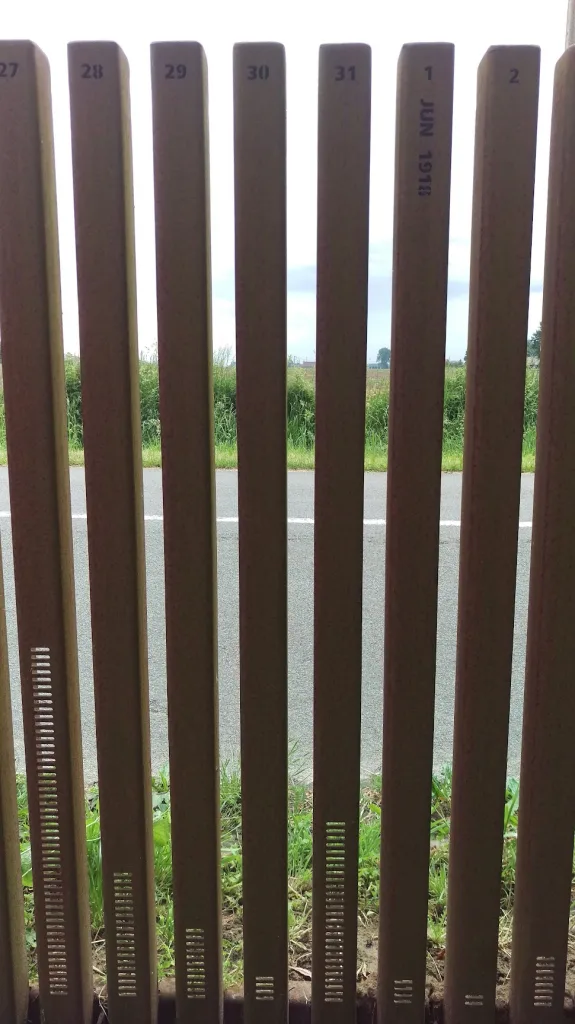
While we were there, we met a Dutch and a French family who were signing the visitor’s book. They had also printed off Henry John’s details and were on their way to find his grave just as we were leaving.
My brother, who is fluent in French, spoke to them about what we were doing. We also discussed the military hospital and various other things while we were there.
Then we got back to the car, and as we drove away from the cemetery toward Poperinge to get some lunch, the heavens absolutely opened.
It was a strange and emotional day, but I really enjoyed being with my family.
Permanently Moved
Permanently Moved is a 301-second personal podcast, written, recorded, and edited by @thejaymo.