

S2E19
The anatomy of an info binge.
Blake > Tennyson > 20th C Anglosphere Public Policy > Keplar > Lana de Terzi > Pearson’s Weekly
—
You can subscribe to Permanently Moved in itunes: permanentlymoved.online/itunes or search in all your favourite podcatchers.
Permanently moved is a personal podcast 301 seconds in length, written and recorded in one hour by @thejaymo
301 // Permanently Moved
Show Supporter 📻
Support the Show
Quarterly zine; my gift to you.
From Blake’s London to Air to Surface Missiles
The Anatomy Of An Info Binge
I was on a weird one this week. Follow along with me on an info binge that took me from William Blake to the first imagining of an air-to-surface-missile.
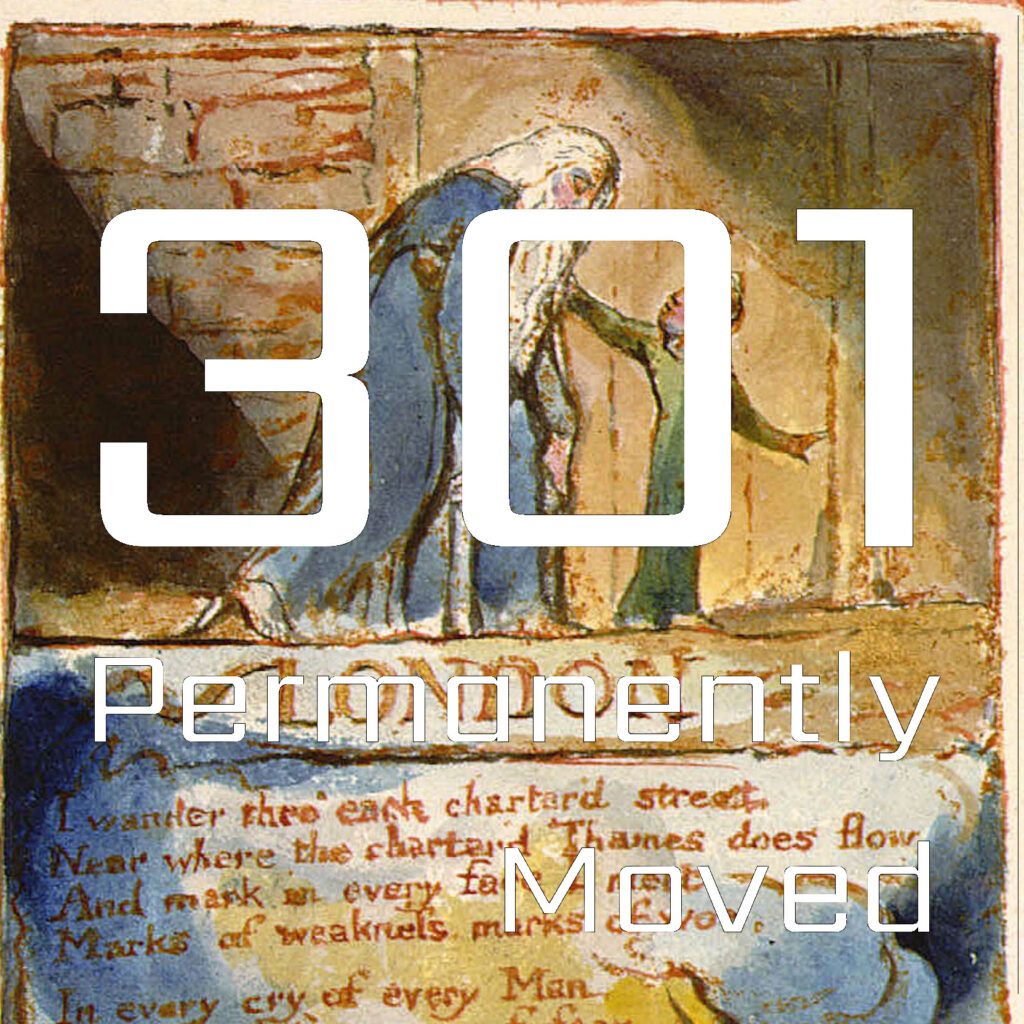
For my Birthday Mr Ben Vickers gave me a pamphlet called William Blake’s Mystic Map of London, by artist and author Louisa Albani
The book takes Blakes work and builds a map of london and demonstrates with wonderful art that Blake really is the OG psychogeographer.
The book makes it clear that whilst Blake’s work is deeply infused with spiritual significance, he was not an isolated ‘mystic’. He was a native Londoner, politically and socially aware of the world around him. He witnessed poverty and social injustice and wrote about it, mindful of the ‘mind-forged manacles’ that he saw as imprisoning the human spirit.
On a mystic poetry kick, I finally read ‘Tennyson an Occultist: As His Writings Prove’ by A.P Sinnett. Published in 1920 by the London Theosophical Publishing House. The inside price indicates I bought it from Oxfam for 40p.
The introduction has some zingers in it like: ‘the self-sufficient “sceptic” (or ignoramus) who challenges every occult writer to bring him proofs of this or that statement that he cannot accept, fails to understand that it is not worth the while of the occulist to undertake his elementary education. Which is the sort of thing I could hear Conner Habib saying on his podcast.
But anyway.
What’s interesting about the book given its publication date is the brief discussion on the poem Locksley Hall. A piece modern writers point to as Tennyson “peering through the looking glass” (see episode 1915) to see the future. Tennyson says as much in the poem: “dipp’d into the future, far as human eye could see,” and he postulates a “ghastly dew” raining from the heavens as “the nations’ airy navies” grapple “the central blue.” you can well see why folks see glimpses of the horrors of the 20th Century.
A.P Sinnett in Tennyson an Occultist says that the only comment he could get from Tennyson on the poem (by way of seance I assume) was the following “‘Tennyson’s answer simply was: ” regret that I wrote it” That put an end to further conversation on the subject. “ Wild. This book goes deep intoTennyson’s occult imagery and has some great UPG anecdotes from the author and an aside.
We now take another leap, as I got interested in other visions of flying machines. I’m sure most of you know of the Vimana in the ramayana. I have a not very good conspiracy book on them.
So instead I turned to the book Rhetoric and Reality in air warfare The Evolution of British and American Ideas about Strategic Bombing, 1914-1945 which I originally bought for the great chapter on the 1899 Hague convention and America’s insistence on holding the door open for strategic bombing. As technology would eventually allow them they argued to bomb things accurately. Very pertinent given the US’s current arguments on the efficacy of drone strikes.
Via this book I also ended up reading E.E. Mill’s dubois “The Decline and Fall of the British Empire” the next day which reads like a UKIP rant written in 1905. But I digress once again.
The Strategic Bombing book then took me to Johannes Kepler’s Somnium. A novel written in 1608. In the narrative, an Icelandic boy and his witch mother learn of an island named Levania (our Moon) from a daemon. Somnium presents a description of how the Earth might look when viewed from the Moon. I’d never heard of it. The text I found describes a man being shot from a cannon into space to the moon which reads like an interstellar cryopod “Therefore, he must be put to sleep beforehand, with narcotics and opiates, and he must be arranged, limb by limb, so that the shock will be distributed over the individuals members”
I also found “The Aerial ship” written in 1670 by Jesuit monk Francesco Lana. Which quite frankly reads like a real prophetic fever dream.
“Where is the man who can fail to see that no city would be proof against surprise, as the ship could at any time be steered over its squares, or even over the courtyards of dwelling-houses, and brought to earth for the landing of its crew. …. or even without descending, iron weights could be hurled … fireballs and bombs. houses, fortresses, and cities could be thus destroyed, with the certainty that the airship could come to no harm as the missiles could be hurled from a vast height.”
Lana however does dismiss the whole idea stating that “God would never surely allow such a machine to be successful, since it would create many disturbances in the civil and political governments of mankind.”
I ended up my infobinge at the short story “Angel of the Revolution”, by George Griffith. Which has the first recorded imagining of an air-to-surface-missile. It’s an OGl steampunk story set on a steam airship published in Pearson’s Weekly 1893
“There was a sharp but not very loud sound as the compressed air was released; something rushed out of the muzzle of the gun, and a few seconds later, Colston could see the missile boring its way through the air, and pursuing a slanting but perfectly direct path for the centre of the fortress.”
I’m trying to find copies of Pearson’s Weekly fiction as the stories seem very readable and would make for some great audio content.
Anyway I hope these somewhat psychedelic leaps through texts have been interesting. I’ll speak to you next week. It’ll be episode 50.