

Everything is Fine
Last week cryptocurrency exchange Coinbase launched a new marketing effort in the UK. The centre-piece of the campaign being a satirical piece of musical theatre about the state of the UK economy, called Everything Is Fine.
Alongside it is a print/visual campaign simply stating facts about the UK economy. Here is a photo a friend sent me of the back of a London cab over the weekend: the poster that simply says, “Real wages: stuck in 2008.”
I sent the person who took this photo the accompanying campaign video and they just replied, “Pure cinema.”
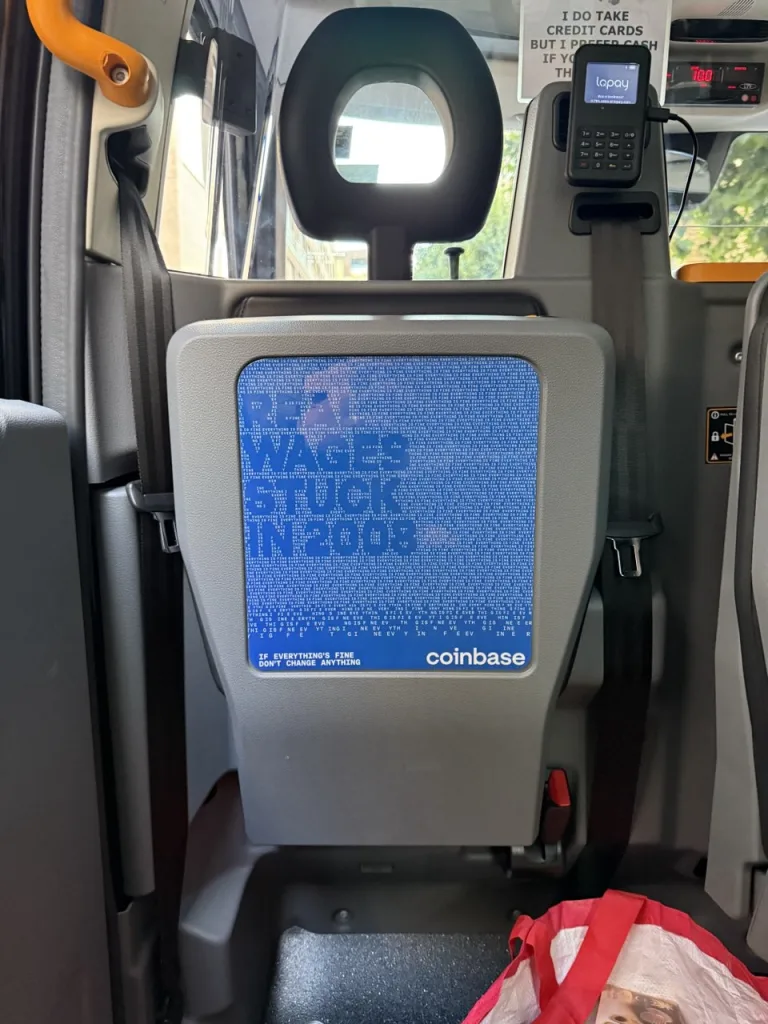
It’s had me thinking, what does it mean for a cryptocurrency exchange to be producing one of the best pieces of satirical media about the current state of the UK?
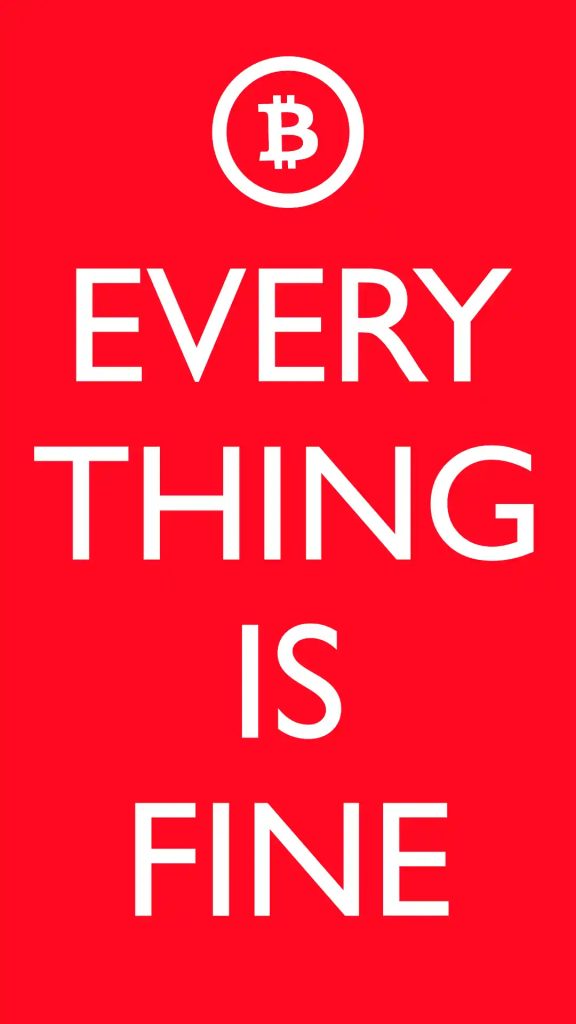
Keep Calm and Carry On
The advert strikes a chord I think because we live in a society where the-people-who-are-in-charge seem to think a better future is not possible—or even desired.“Everything is fine” is basically the ruling ideology/mantra of the media class in the UK.
I belive the “Everything-is-fine-ness” of the media class is the logical endpoint of the most pernicious meme to enter the British psyche in my life time: “Keep Calm and Carry On.”
The original Keep Calm and Carry On poster (if you belive the lore) was discovered in a bookshop in 2000. A powerful piece of World War II-era government propaganda intended to be displayed alongside “Freedom Is in Peril / Defend It With All Your Might” for deployment in a worse case scenario if the Nazis ever directly attacked the UK beyond the Blitz. Of course, it was never deployed, because things never got bad enough for it to be used, and all copies were supposed to be destroyed, leaving only a handful remaining.
It’s hard to express to someone who isn’t from the UK just how much gravity the Second World War (80 years on from is resolution) still exerts on the British cultural psyche. Boomers sing wartime era songs at dinners and dances, and pretend they won the war personally on social media all the time. We dress our children up as evacuees at school and get them to pretend they were caught up in it too. And we have newspapers that considers not wearing a Remembrance poppy on television or at formal events in the month of November basically tantamount to treason.
Whilst the original poster may have been re-discovered in 2000, it took nearly a decade for it’s sentiment to diffuse out fully into public consciousness. All it took was the 2008 financial crash and subsequent recession and the Coalition/Tory government’s imposition of austerity on the county.
The public sort of ‘self deployed’ the most powerful piece of World War II propaganda ever created on itself. And the British cultural psyche ate it up. A way of avoiding the effects of austerity etc.
Coinbase’s ‘Real Wages Stuck in 2008’ is a fact. The slow bleed out of the UK economy over the last 17 years. We’ve dealt with austerity, Brexit, pandemic etc. The looting the elite engaged in during the final years of the Tory rule was basically ‘stiff upper lipped’ and tollerated by the general public by keeping calm and carrying on, and buying cupcakes.
The death of possibility that this mantra had on UK culture was given a name by Tom Whyman at the time back in 2013: “Cupcake fascism.”
this constellation includes “tea-drinking, knitting, cycling, sorting out one’s recycling properly, organic food, free-range eggs and local produce, gin, real ale, Cath Kidston bags, throws on the couches, making your own chutney, and Rugby Union.”
It is rather in what these things come to symbolise. They are all ‘nice’ things and they are used as expressions of how it is nice to be nice and how life would be better, perfect indeed, if people were just a little bit nicer. The possibility of ethical life comes to be contained, for people, in these objects, which means that for people who enjoy them the possibility of the world functioning well comes to end up looking like: if everyone behaved a little bit more like, and enjoyed the same things as, me, a nice middle-class boy or girl.
Keep Calm and Carry On was a cultural mantra and delusion that, in the post 2008 world, suggested that if everyone (and in particular the middle class) just collectively ‘wished hard enough’, things might change for the better.
Of course, that didn’t happened.
2008 was of course, also the year that Bitcoin launched. Another idea based on the same stucture: the idea that if one wished upon it hard enough, it would make it true.
The difference being that our collective wishful thinking was a passive hope, while the Bitcoin bros’ was an active form.
Britain throughout the 2010’s didn’t wish hard enough, but the Bitcoin bros did.
Which is why this is relevant to the Coinable advert.
Exit Through the Casino.
I’m currently about 1/3 of the way through the final edit of a text I’ve been working on since January called SLOP MACHINES. It’s about 40,000 words focused on the post 2008 fusion of code and capitalism and the world that it has created. So I’ve been thinking about crypto and culture all year tbh.
Coinbase’s advert is, I think, effective satire because it’s true. Since 2008 everything really has gotten worse. “keep calm and carry on”, the most powerful memetic weapon the UK government ever devised has run out of juice. “Everything is fine” really feels like the only line the elites in this country seem to muster.
Yet, we all have eyes and can see that it’s really not.
The advert itself, with its melody reminiscent of Oliver Twist musical; also contains a threatening subtext—one aimed squarely at the middle and credentialed classes. Everything is fucked, and if you you don’t do something you’re going to be driving for Deliveroo.
The implied message and solution of Coinbase’s advert is basically “a brighter future through finance”.
This image from my post on playability and systems the other week sums this sentiment up:
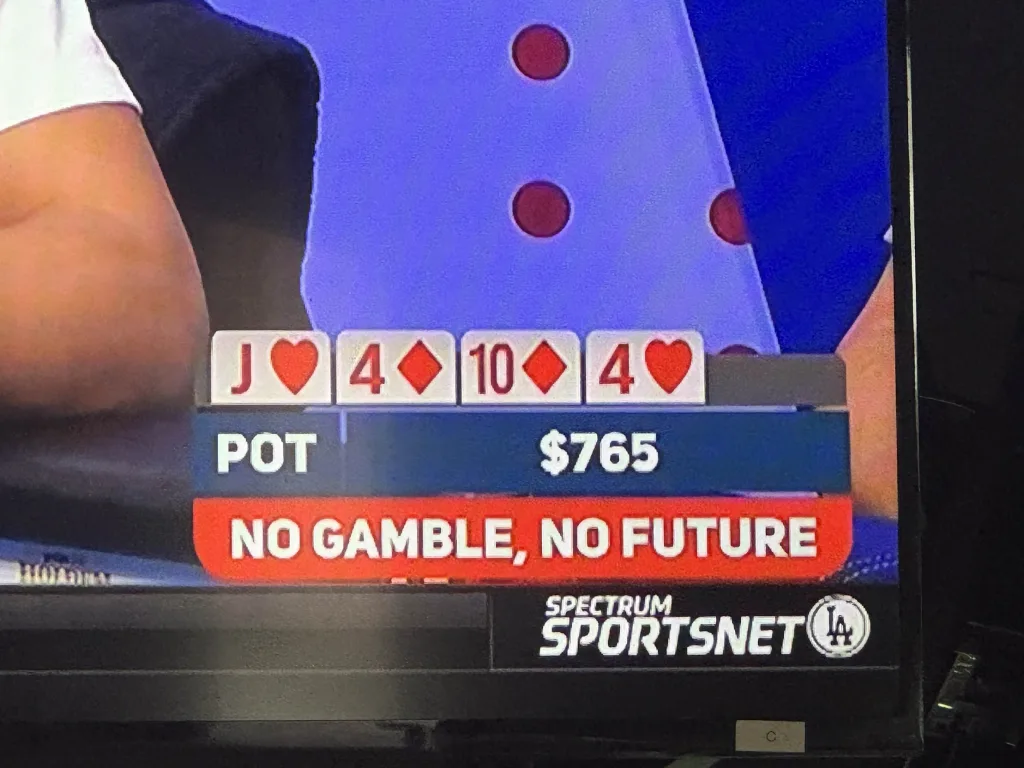
‘Gambling it all on hyper finance’ is, in my opinion, one of the only avenues of perceived agency that people have to escape the rot economy they find themselves in.
“If you want out, you need to exit via the casino.”
The other seemingly being “Blame migrants.”
You may think that I’m being cynical, but this sort of ‘casino culture’ is everywhere in the UK.
This recent Novara interview with Dr Eliza Filby author of Inheritocracy: It’s Time to Talk About the Bank of Mum and Dad is interesting as she talks about the cultural explosion of financial advisers, financial podcasts, and people telling you how to manage your money we have seen since the pandemic.
In fact 46% of Zoomers in the UK own financial instruments, and 28% of the 18-34 year olds own crypto.
Rachel Reeves despite being part of Starmer’s “Everything is Fine” government, definitely knows that everything isn’t fine. She also sees “exit through the casino” is a viable avenue for exploration for the popualtion. Just last month she announced plans to nudge savers into buying stocks and shares instead.
The Coinbase campaign is effective because it’s speaking to the public’s justified anger, and explicitly names the rot that we have all been told to ignore: a nation that’s been economically frozen since 2008. But it channels us away from collective political questions and towards individual financial risk.
As good as “Everything is Fine” is, the ad’s satirical despair is basically a marketing funnel for its preferred solution: “exit through the casino.” It reframes systemic failure as an opportunity for a personal gamble.
As casino culture becomes more and more mainstream, and the government validating it as a legitimate escape route, the crucial question becomes: what happens when this bet fails for the majority?
What are we going to do when the ‘exit through the casino’ proves to be a revolving door?
Start Select Reset 📑
Subscribing to SSRZ supports my online work and creative projects.
As a thank you, I send you my zine four times a year, just like it’s 1994.