

I’ve had a really busy week this week. It’s been non-stop and it seems like next week will be very much the same.
Someone once told me that busy builds busy and I think that’s largely true.
Keep going. Take it day by day
Generalist Mode
The last few weeks of making my show have been some what experimental – this week is also no exception. Not that the people listening would know as I was focused on visual side of things in #learningmode.
Here’s everything I learnt / did for the first time this this week in order to make the youtube version of this weeks show:
- Tried out several scanning apps and techniques to produce Gussian Splats including setting up the command line pipeline to do it locally on my M2
- I inhaled everything I needed to do about re-rendering gaussian splats locally
- How to handle splats in Blender
- Camera controls in Blender – lens/DoF etc
- How to fly a camera though a scene along a curve in Blender
- Keyframes and animation in Blender
- Rendering animations – materials view
- Importing animation/PNG sequences into Davinci Resolve
It was all in all a successful week for learning new things. Part of me thinks they are uselss things to know how to do – but then again I’m never not going to know how to do them in future – you know?
There is out there, the idea of a ‘Generalist‘
At various points over the last few years, I’ve used some combination of “generalist,” “synthesist,” and “curator” in my Twitter bio and elsewhere. It’s only recently that I realized they can also be seen almost as steps in a process: look at a broad landscape of topics, synthesize what you see, pick the most important. I like the term generalist, it’s one of the best descriptions of my career(s) and also a good representation of something I see as vital: being able to understand different domains and translate between them.
Although generalist is the term I tend to settle on, there are a number of other adjacent ones in use. The first I heard was T-shaped people which, as imperfect as it is, I’ve been attached to and referring to time and again in various discussions. There’s also Key-shaped, Square-shaped, and The Neo-Generalist. It also ends up representing something that’s too often circling in my mind: the space between the value of a generalist, and how people “on the other side” receive this type of profile and don’t often integrate it in their decisions.
It’s something I’ve spoken with Patrick at Sentiers a few times about in the DMs as it was via him that I first heard of the term. Julian at the NFL has a ‘Generalist club’ channel in the discord too.
Whilst I have deep knowledge in a domains, I have a whole bunch of shallow knowledge across loads of stuff. You’d be surprised how much one can learn in 30 hours about custom semiconductor chip design and rapid prototyping of PCBs alongside with a team doing just that. But more practicable I know how to do a whole bunch of stuff across all kinds of software. The Blender stuff above is just an example.
I have an expression about having working knowledge of a piece of software which I call ‘being 1 menu deep’. Being 1 menu deep means you know your way around the software. Know what things do and how to invoke whatever function they apply. You can get simple things done required to achieve your goal -in my case fly a camera though a 3D environment in Blender. But beyond that I have no idea.
When I was learning the basics of Unreal engine I thought I’d quite like to see some anamorphic lens flare in the scene i’d created and going online to find out how to do that exposed that … cameras and lenses are peoples *entire jobs*. Way more than one menu deep so I abandoned it.
I’m can go one menu deep in all sorts of software because I’ve had goals i’ve wanted to achieve – either via a project for work or independently. I can find my way around most music production software 1 menu deep, but the only know the DAW Renoise to deep levels. Blender, Godot, Unreal Engine, Affinity Suite, Scrivener, Davinci Resolve, Twine, Figma, are all things I have installed on my Mac right now and can use competently one menu deep. I’ve been using Descript for 4 years and Renoise for nearly 20. I have deep knowledge of excel and google sheets and a whole bunch of various project management software. I used to be salesforce certified and can competently write SQL and it’s weird variant Transact/T-SQL. There’s more but I can’t think of any more off the top of my head.
All of this is a result of skill acquisition. But the thing is – being 1 menu deep is useless to most people who need you to have gone deep for a proper job. But on the other hand its highly useful to people people who have no idea how to do any of that stuff. I’ve had short contract at early stage start ups where I’ve been helping with ops that have turned in to 2/3 full time jobs when it has ended up. Which sort of illustrates the problem with generalists. We are super valuable in certain environments. But the problem with making ‘Generalist’ a working identity is that may companies don’t realise they need one until they have one on the team. A single cross functional team of one.
But this doesn’t fit into the corporate world view, everyone boxed in and graded by role and job description. I’m personally not sure how one is even supposed to write about oneself when the ‘sell’ is I know a lot about very little? I sort of feel that someone should write an essay called “Generalist Mode’ as a counterpoint to that Founder Mode essay.
Anyways. The the point I wanted to make when I started stream of consciousness typing is that I’m really pleased about all the stuff I’ve learnt this week.
OTB
On the blog this week
How I Made NotebookFM with NotebookLM
I wrote up how I made last weeks episode of 301 – as someone asked me how I did it:
I actually think if you’re interested in trying out NotebookLM as a tool, it’s worth testing it on your own corpus/body of work. You can calibrate on what it’s good at, where its limits are, and what it gets wrong.
Photo365 – Sep
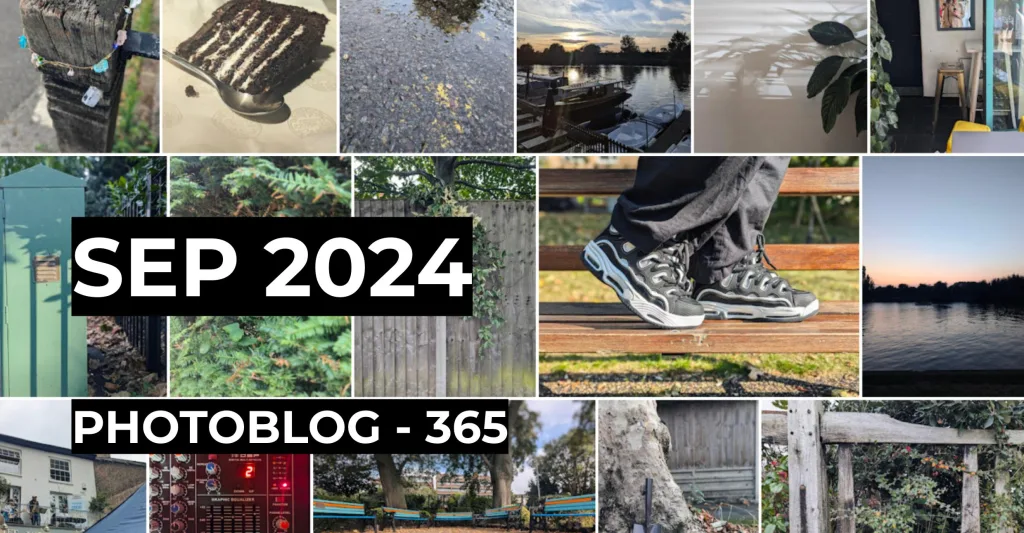
I posted my month of photo a days for September 2024
Permanently Moved
Shape Thief
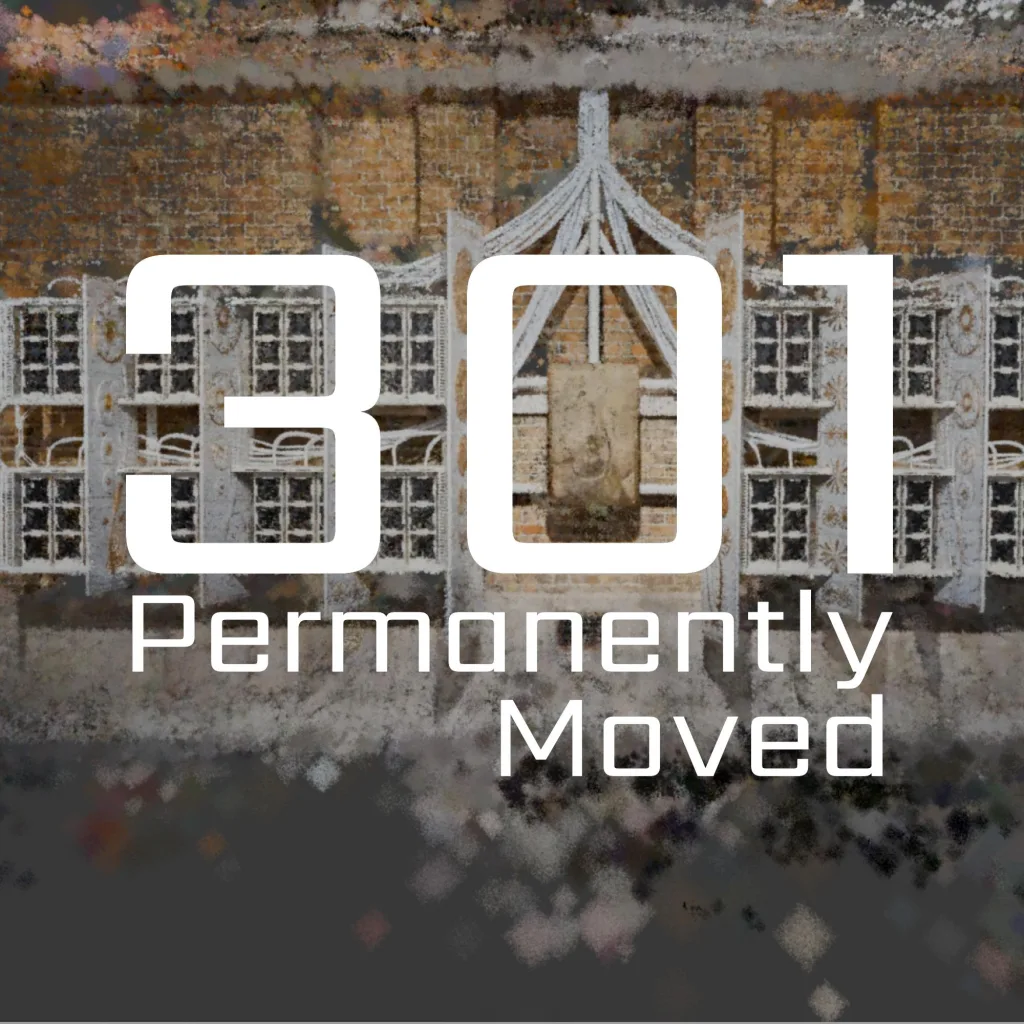
On Thursday, I was at the Serpentine Gallery in London for the opening of The Call, an exhibition by Holly Herndon and Mat Dryhurst. The work, as they write in the program, is a commentary on how “the process of collecting data raises questions about the governance and permission of its use.” and so is this episode..
See the scans in the youtube version of this episode! https://youtu.be/BXBF1MsvOlE
301 // Permanently Moved
Show Supporter 📻
Support the Show
Quarterly zine; my gift to you.
Photo 365
The Ministry Of My Own Labour
- Trying to build a new server and get some Python Scripts running for PROJECT DIVE – lots of debugging between ChatGPT and Claude but did it!
- Finished SSRZ but blocked by the fact that due to temp closures, the nearest post office is 40mins walk away WTF
- Started writing and thinking about a big document for PROJECT ENTRY – 3 week deadline.
- Had some fun writing lot’s of marketing copy for PROJECT ENTRY
- Wrote up my notes about Yaelokre but I need to make sure that I’m not chatting shit as it was all from memory.
Terminal Access
Craig was on Novara Live earlier this week speaking with Chal Ravens about his new book Cyberboss.
So how can we resist exploitation when the boss has been replaced by a computer? That’s the premise of Cyberboss, a new book by Craig Gent, North of England editor for Novara Media. In order to write it, he returned to the tradition of the workers inquiry, speaking to Amazon warehouse packers, Deliveroo drivers and supermarket shoppers about labouring under the algorithm.
Dipping the Stacks
there is another story to tell about Child’s influence on design, one less about the products she made desirable and more about how her ethos shaped the environments in which she worked. Her kitchens were distinctive but not glamorous or miraculous. Reflecting principles and skills Julia and Paul Child had developed in earlier careers, these were highly rational spaces, rigorously designed by the couple to support the varied activities and lives that played out there.
Doom scrolling – Works in Progress
Not one scrap of text from the ancient world has come to us without untold numbers of heroes quietly working to hand down, from generation to generation, the texts that have primarily shaped the modern world.
How Games Run Everything from Online Dating to Social Media to Stock Markets | Scientific American
Because games are so good at shaping our behaviors, they’ve been adopted in the design of many of our modern social and economic systems. Now game design dictates what ads we’re served as we scroll through our feeds, how we’re paired on dating apps and how we’re matched with jobs.
Dungeons & Dragons taught me how to write alt text – Eric Bailey
The person who runs the game of Dungeons & Dragons has a responsibility to provide an entertaining and memorable experience for the other participants.
You wield power as the person enabling and facilitating the experiences others have. This applies to roleplaying games as well as writing alt text.
We play with our dolls. Then they play with our minds | Aeon Essays
The opposite of a bukimi valley, it’s a valley of wonder that speaks to our need to begin with the miniature, to scale down the universe to something we can see whole, and perhaps even control, to map ourselves onto time with stories and, by doing this, transform and reshape the world.
Reading
I finished Dead Famous: An Unexpected History of Celebrity from Bronze Age to Silver Screen by Greg Jenner. A book i’ve been reading on and off since July. I really enjoyed it, and it gave me a lot to think about. It was interesting reading about the definition and ‘nature’ of celebrity in the context of having recently finished Extremely Online by Taylor Lorenz. I wonder if we shoudn’t go back to using the term CeWebRity.
I also read Broad Band: The Untold Story of the Women Who Made the Internet by Claire L. Evans this week. Another entry into my history of computing binge that I’ve been on over the last few years. Really enjoyed this book. Adding so much depth and colour to a history the I thought I had a pretty good handle on.
Also on deck: Wisdom – Letters of St. Joseph the Hesychast, Puppets, Gods, Brands: Theorizing the Age of Animation from Taiwan, Puppet: An Essay on Uncanny Life by Kenneth Gross
Music
Years Of Rice And Salt – Nothing of Cities
This week I discovered London based 6-piece instrumental rock / folk band Years Of Rice And Salt (Named for the KSR novel). Specifically, I’ve been listening to their 2011 album Nothing of Cities. They sound a bit Explosions in the Sky, maybe a bit Mono. No idea if they are still together – their last record was 2017.
Nothing of Cities is a patient album, full of complex layering, melodic evolution, and pure joy.
Remember Kids:
Knowing exactly what it is you are doing is the key.
Shawn Coyne, Steven Pressfield – The Story Grid