
Yesterday Cloudflare announced the launch of their own U.S. dollar-backed L2 blockchain stablecoin NET Dollar, alongside support for the newly proposed x402 protocol deployed at the edge on their server infrastructure.
Third Time’s A Charm
That word salad above might mean nothing to you if you aren’t as deep into this part of the tech industry as I am. But for those of you do understand it, I’ll observe that the reaction across the different communities I frequent online have been … mixed.
On the one hand. the people that think crypto is all scam, and will stink forever are highly skeptical, and quite cross that Cloudflare have even gone near a blockchain. On the other, the AI/Crypto expert group chats I’m are all extremely bullish about what has been made possible by the adoption of standardised payment rails being built directly into the HTTP web protocol.
Yesterday’s Cloudflare announcement seems to have caught the wider developer community off guard. But it’s hard to follow everything and if you hate blockchains then you have no idea whats going on. Things are moving really quickly however, it was only two weeks ago that Google’s paper on ‘Virtual Agent Economies’ dropped, and their follow up announcement on the 16th Sept that they would be supporting the Agent-Payment-Protocol (A2P) which extends the x402 protocol developed by Coinbase and the Ethereum foundation amount others.
Because both the crypto and AI spheres move at warp speed, only one day after Google flipped the switch on x402, in one of the industry group chats I’m in, Loaf from Daydreams—the agents platform for fully on-chain games—announced full support and implementation.
Router
The Daydreams Router acts as an intelligent gateway between your application and AI models, providing unified access to multiple AI providers through a single API.
🌐 Live Service: router.daydreams.systems
Key Features
- Unified Interface: Single API for OpenAI, Anthropic, Google, and more
- Model Routing: Automatic selection and fallback between providers
- Dual Authentication: API keys or x402 USDC micropayments
- OpenAI Compatibility: Works with existing OpenAI SDK clients
- Cost Tracking: Monitor usage across all providers
It was because of this speed that I ended up on an extremely long zoom call/workshop last week with a bunch of very smart people from across AI, Crypto, and custom hardware industries talking about: AI agents + crypto rails = possibility. Everyone’s spidey senses were all tingling at once.
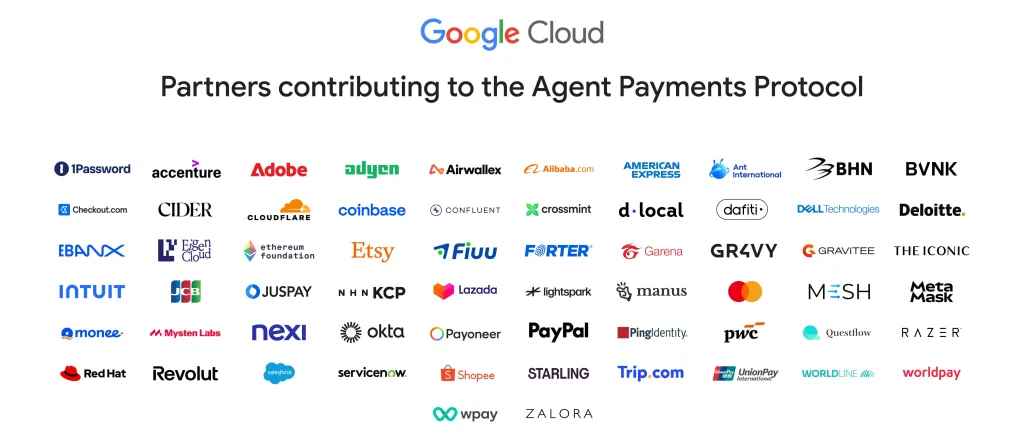
It’s quite a big deal that payment rail protocols at the HTTP level, AND the Agent-to-Agent (A2A) protocol has adoption from two major vendors, Cloudflare and Google and A LOT of industries partners:
I must also extend this background and mention the EIP 8004 protocol proposal. Which since august has been working its way through the Ethereum Foundation improvement process. This proposed new standard will extend the A2A protocol further and allow Agents to “Discover (other) agents and establish trust through reputation and validation:” in a fully decentralised way.
Abstract
This ERC extends the Agent‑to‑Agent (A2A) Protocol with a trust layer that allows participants to discover, choose, and interact with agents across organizational boundaries without pre‑existing trust.
It introduces three lightweight, on‑chain registries—Identity, Reputation, and Validation—and leaves application‑specific logic to off‑chain components.
Trust models are pluggable and tiered, with security proportional to value at risk—from low-stake tasks like ordering pizza to high-stake tasks like medical diagnosis. Developers can choose from three trust models: reputation-based systems using client feedback, stake-secured inference validation (crypto-economics), and attestations for agents running in TEEs (crypto-verifiability).
What’s funny about all this is this is now the third time that I’ve been through a serious period of AI and crypto rails conversations.
The Second Time
The second time around was back in 2018, taking part in think tank discussions a series of workshops. One was the Terraforming Earth series at Het Nieuwe Instituut in Rotterdam. Incidentally, this is the series where I gave my first public talk on Solarpunk.
The final output of this AI/Data/DAO/Payment Rails conversation eventually manifested in the form of the Zoop (As in Zo-op. Zoe the Greek for ‘life’ and cooperative). An innovative legal form under Dutch law that makes the interests of non-human life part of an organisation’s decision-making.
In a Zoöp, human and other-than-human life work together to foster a practice of ecological regeneration. To become a Zoöperation, an organisation appoints an independent ‘Speaker for the Living’, who helps translate the interests of other than human life into the organisation’s decisions. This Speaker guides the organisation through a structured learning process, based on a yearly cycle. In this way, the organisation discovers how it participates in ecosystems and how it can transform its negative impact step by step into a positive one.
And of course, my pals at the Terra0 project have been asking the provocative question: Can an augmented forest own and utilize itself? since 2016.
I must admit it’s fun to be around payment rails for crypto, AI, and data conversations again. But what’s more exciting, is that this time around it’s real.
The x402 framework isn’t just for Crypto of course.
Built around the HTTP 402 status code, x402 enables users to pay for resources via API without registration, emails, OAuth, or complex signatures.
it’s a very comprehensive spec that allows for all sorts of payment gateways. Its core mechanism is payment-agnostic, standardising the request for payment rather than the payment method itself. This means it could be adapted to use traditional gateways like Stripe, VISA etc just as easily as it uses a crypto wallet, creating a universal standard for pay-per-use/as-you-go access online.
Verticals of One
I personally think that the adoption of x402 framework across the web gets us one step closer to the ensemble of discrete, modular plug and play service design patterns that I outlined in my Verticals of One Vx1 essay back in 2020.
As a reminder, here’s the diagram (adapted from my palls at Rival x Strategy)
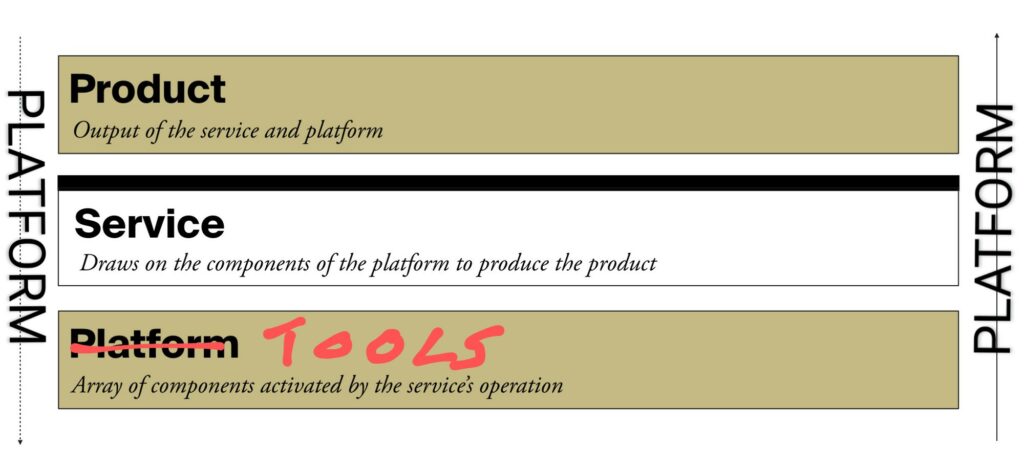
In fact, the first example I gave for types of things that make up the tools layer was financial plumbing.
A Vertical of One is an individual with access to a complete ensemble of discrete, modular plug and play technologies. Such as: financial plumbing, dynamic IP ownership, content delivery, walled gardens, community gates, governance tools, and smart contracts operating at different levels of abstraction. Interoperable, yet vertically integrated to produce one (nominally seamless) user experience.
Once met – individuals operating as Verticals of One will be able to seamlessly enter and exit new forms of Alegal organisations built around a “nexus of contracts”. Associate with, create, own, and retain collective value. Whilst cooperating inside an ecosystem of new monetary fabrics.
Also, as the AI harnesses have developed in the last 18 months we’ve seen the same ‘dynamic array of components’ pattern emerge there too, with Tool calling.
In a Vx1, the platform doesn’t care if you are a human or an AI. On the blockchain, your identifier is a wallet address only. The system doesn’t care if you’re an AI agent, a forest, a human being, or a group of people in a DAO multi-sig.
I don’t have time to discuss it here, but it has profound implications for the Alms Race.
The First Time
The first time I had these kinds of conversations was way way back in 2013–2015 at the early Ethereum meet-ups in London. Back then everybody was talking about, reading, and being inspired by books like Accelerando (2005) by Charles Stross and Daniel Suarez’ duology Daemon (2006) and FreedomTM™ (20010)—particularly with regards to the idea of DAOs. In fact we used the Daemon series as the core text in the design fiction course I taught at the New Centre ’Daemon & Discord:Anatomy of the DAO’ in 2022.
In the early days of Ethereum and smart contracts—well before mainnet was even launched—for many, the ‘autonomous organisations’ we were all dreaming about were always supposed to be controlled by machine intelligences.
That DAO’s became a ‘group chat with a shared bank account’ was just one exploration of the form. Also, it was an expression and that funded a great deal of innovation and experiments in the area of online governance. Which is a field of the humanities, UX and protocol design, that is even more relevant and urgent now that countries are having revolutions and electing new presidents on Discord.
Now. You might think that the fusion of AI agents and crypto rails is an unholy alliance. I understand. And you also might also think that blockchains stink, and is a scam machine. But putting all that aside, Bitcoin is 16 years old, and Ethereum is 10. Both are extremely robust technologies that are producing, capturing and organising over 3.7 Trillion dollars in value.
It was the GENIUS Act that made x402 possible. Now that the US has finally pulled its finger out, and given the industry clear guidance for most broad categories of blockchain use after dragging hits heels for a decade, expect lots more innovation.
Elsewhere, Stripe set out its AI+Stablecoin vision back in May and acquired both Bridge and Privy this year, and can now can handle all sorts of crypto transactions including stablecoin support, and provides extremely robust wallet infrastructure for businesses.
If the first phase of Ethereum was about the creation of, and organisation of, value (Coins, Tokens, Markets, etc). Then the next phase is about the creation of the service layer that engages with the deployment, vector, and velocity of value.
For a decade people have been asking ‘whats the use case?’ for crypto and many (including me) have been replying ‘We’re waiting for AI’.
Experimentation with payment rails, built on top of crypto—for people, AI Agents and soon other types of non-human actors or synthetic entities—are only going to proliferate and speed up across all sorts of platforms and use cases.
Brace for Weirdness
This proliferation is happening whether we are ready for it or not. And the hard truth is, we are not ready.
We, as a culture, are totally failing to get to grips with the idea of Living Alongside Computer people already. On social networks, in our software, in our phones etc. We’re totally unprepared. We already saw what happened the first time LLMs were hooked up to crypto rails and given access to social media and markets at scale. I wrote about realtime attention markets, the new economic entertainment emerging in 2024 extensively because things really went off the rails fast. I think things are about to even more crazy.
Meanwhile over here (unless Labour decide to do something really stupid—but it looks unlikely) in the UK, we nearly have all the common law guidance in place for NFTs to represent real-world assets. I suspect within the next 18 months we’ll see the first house change hands as a tokenised asset on the blockchain, with zero friction or bullshit solicitor nonsense.
We are rapidly approaching a world where businesses, people and AI agents will be able to buy plane tickets, trade virtual currencies, gold bars, and buy and sell houses all on the blockchain.
There is still a lot of work to do. Wallet infrastructure—especially on the consumer side—needs to rapidly improve and support the kinds of use cases and challenges Little Computer People equipped with their own identities are going to present.
Browsers like Brave, already rapidly gaining marketshare, has had a built in crypto wallet for half a decade already. And, because ‘Google’, I suspect x402 support will be coming to the chromium project soon too. But at the National level, particularly the EU, things are going to creak and groan under the weight of existing KYC and AML legislation. They are going to really struggle with the concept of AI agents scurrying around paying for things and making and breaking markets.
All in all though, I personally think the last 2 weeks have been thrilling, I’m so glad all of this is happening, after a decade of conversations, perhaps the third time’s the charm?