
After skipping my reflections on 2024 last year, I realised at some point during 2025 that writing these ‘year in review‘ things on here have become quite important ritual for me.
It is after all how the blog more or less got started way back in 2012, and without it, my year feels somewhat ‘unarchived’, the previous year bceoms a collection of events without a cohesive narrative put down and published.
I sat down last week intending to write this in one shot, but it quickly became a 5,000-word monster.
This post moves from the macro to the micro. It starts with my thoughts on the “Butlerian Jihad” and the ongoing cultural reception of AI, shifts into why I think the “Social Media Winter” has become a nuclear one, and I also talk about why I’m still blogging on the open web.
I also talk about some of the bigger professional achievements and projects I’m proud of this year: cybersecurity games and on-chain interactive fiction, my “Little Guys” (AI companions) writing, and a couple of other personal bits and bobs too.
It turns out that when you stop scrolling and start thinking, there’s was a lot to say. It’s a big post. Feel free to take your time with it, and don’t forget to leave a comment below.
Culture War Iconoclasts
Genocide and other horrors aside, the most dominant thing in the cultural sphere last year was, of course, the further acceleration and cultural reception of AI. By AI of course I mean the now 9 year old technology known as the Self-attention-based Transformer. Which currently falls under the catch all word of “AI”.
I wrote an episode of Permanently Moved early in the year called “The Information Age Iconoclasm”. I still stand by that framing.
But as the year progressed the contours of the cultural divide (war) over the reception of this new technology solidified.
Butlerian Jihad
Using the term from a religious holy war Dune is quite apt, because there are supporters on both sides of the argument with both high and hard opinions that I suspect are never going to change.
More reasonable Anti-AI folks think of themselves as Neo Luddites, taking the position of being against a new technology harmful to the commonality which is fine. But in many people in the latter half of 2025 have taken on postures more akin to religious zealots. More like the iconoclasm of the Byzantine Empire than political actors.
There have been a few articles in recent weeks that to my mind put the data centre energy and water issues to bed. This one on why the zealots don’t care is also very good.
Off the top of my head there are several currents inside the Anti-Ai camp:
- The labour and consent people, who are basically saying: this is extraction; this is wage pressure; this is unlicensed training; this is enclosure of the commons.
- Artists and craft defenders, for whom the entire point is the integrity or sacredness of art; not just “I want to get paid” crowd, but “Signs and images are what make us human”.
- Environmental and infrastructure critics, who see the whole stack as an emissions and compute arms race.
- Epistemic doomers, who are worried about the infinite media machine; fraud, spam, persuasion, the corrosion of trust, the collapse of shared reality.
- There’s a moral panic; the “think of the children” contingent who treat the whole thing as a kind of cultural contamination.
- That AI-generated media is a solvent on development and taste, that kids will be raised on slop, that nobody will learn to write, draw, read deeply, or struggle through the apprentice stages because the machine will do it for them.
- In its softer form it’s a legitimate anxiety about education, attention, and the conditions for becoming a competent adult.
- In its harder form it turns into a familiar reactionary posture, where “protecting children” becomes a rhetorical trump card and “no one can read and write” is a blanket story.
- That AI-generated media is a solvent on development and taste, that kids will be raised on slop, that nobody will learn to write, draw, read deeply, or struggle through the apprentice stages because the machine will do it for them.
- Then there’s the purity wing, who are the iconoclasts proper. Taboo. Using the tool is a stain, touching it makes you complicit, and any beneficial application is still treated as contaminated by the original sin.
Things have grown so bad in this final camp that in late 2025 over on Bsky, people were expressing Anti-Ai opinions so fervently that they were effectively ‘pro-cancer’. Frothing at the mouth about the use of transformer technologies in early cancer detection. This is not a normal response to a new technology?, at least not in my lifetime so far, that’s for sure.
Speaking with friends, close friends even, who are anti-AI for their own reasons and fall across the camps listed above, their position sometimes registers to me almost as irrational as the Christian / Conservative satanic panic campaigns I experienced the tail end of first hand during the late 90s/early 00s. The difference, of course, being that the Satanic Panic was a “hallucination of harm”, whereas the AI-resistance about the “harm of hallucination”. I just think that when arguments slip from ‘how do we get paid?’ to ‘this technology is inherently demonic,’ the wider movement loses its political utility and becomes a purely aesthetic exorcism.
None of my friends in this camp, I think, I hope, would go so far as to be pro-cancer. But nevertheless, the level of zealotry is really concerning. It’s also very weird interpersonally given that we agree on 80 to 90 percent on other things; politics, culture, taste in books, etc.
And to be clear, I share some of the very real concerns from across the spectrum of Anti-AI camps. And I’m also not saying that things are any better over in the the Pro-AI camp either.
It’s all hyperbolic, hype train all the time over there too. I think you can also sort the pro-AI side into a few churches, most of which are operating on some flavour of inevitability.
- The accelerationist wing doing Silicon Valley eschatology; we’re building God, history demands it, anyone resisting is a peasant with a torch.
- The aliens are here: theres a weird new thing inside of the computer and it’s talking to us.
- Competitive geopolitical realists; if we don’t do it, China will (and they will).
- Builders; who just want to see what they can do, make useful tools right now, and society will patch the harms later. (the WWW approach)
- The abundance crowd, selling a near-future where everyone gets a tutor, a lawyer, a doctor. We’ll cure cancer and live forever. Scarcity is over bro.
- Safety freaks: “If Anyone Builds It, Everyone Dies “
- And the Vulture Capitalists who don’t have any opinion on anything beyond number go up.
The Butlerian Jihad does not have a unified front, on other side. Both are landscapes of competing anxieties. But so is the rest of the culture war too.
Thinking about the warring sides, you’d be forgiven for wanting to opt-out entirely. But unfortunately we are all, by virtue of our participation in this culture, in the present moment, in the mid morning after the dawn of the Information Age, already conscripted into the consequences of the silicon transistor. And I find my own coordinates firmly established.
Regular readers of this blog will know that I am very much in the pro-AI camp, but then again I’m also pro-metaverse and pro-blockchains too. And I genuinely think that the confluence of AI, new monetary technologies and, worlds are in the medium-term the future and where all this is going.
I’m an ‘The aliens are here’ pro-AI guy. This anecdote sums my own position up I think:
Late last year I was in a meeting with a bunch of folks and got asked what I thought about AI, and I replied:
“I cannot believe that it exists. A fucking alien intelligence is arriving. It’s insane that the application of the raw transcendent qualities of mathematics to a substrate of a vast majority of all of human culture resulting in the creation of a hyper-dimensional crystal has machined into existence a monster inside of my computer.”
I realised after the words came out of my mouth that I had misread the room. They had only wanted to know what I thought about the newest version of ChatGPT.
The Information Age
I was back on New Models podcast late last year talking about forthcoming book SLOP MACHINES OF LOVING GRACE.
Here’s the promo clip, as I think it’s a useful recapitulation of some of what I wrote nearly 9 months ago in ‘Information Age Iconoclasm’.
“We are now 70 years into the information age, you know, 1947 we get the first silicon transistor and everything that’s happening is part of this continuing process. The revolution that we were told about as kids, in the 90s is still happening. It didn’t stop. We literally live in this world with Fantastical technology and it’s all the products and downstream of the information age that is continuing to unfold, right?
If the late mediaeval period and the Renaissance is like the perspectival age. If that’s its own age proto-modernity this information age isn’t going away.“
That conversational riff is basically a shorthand for a much larger historical anxiety I’ve been chewing on for a while. We often mistake the tool for the event. But when we look back, the tool is just the spark for the fire that follows.
Everything that we know about the nature of quote-unquote modernity: nation states, well-informed citizens, and Westphalian governmental arrangements etc are post the invention of the printing press. But they are also all ideas that emerged after the end of the Thirty Years War.
The wars of religion didn’t happen after the invention technology of the printing press itself. But over the consequences of the invention of that technology.
In history class at school we’re taught that the printing press gets invented, and then 100 years later, someone stuck a pamphlet on the door of a church, and then … 8 million people died.
Would it really be so surprising to read in a history book sometime in the future about the world-changing invention of the silicon transistor, and then less than 70 years later we arrived at thinking machines… and then lots of people died?
The crystal fire of the solid state transistor was second Promethean moment for humanity. You, I and everyone alive right now are living though the early consequences of that moment. We live in the Information Age.
This invention of mathematical Self-attention-based Transformer and its consequences are downstream of the transistor. If we all like our super-fast MacBooks, iPhones, televisions, Xbox’s, then AI also comes along with it I’m afraid. And so too does the ubiquitous surveillance state, cyberpunk corporate stacks, and everything else that’s bad about the current era. It’s all bound up in our early period of living inside, and with, computational culture.
The last century saw its own fair share technological development of course. In media; photography, film, radio; television etc All of them shaped our understanding of what media ‘is’. And just as for people who lived through the advent of film or photography, it raised questions about the nature of the image, of what it is. We face those questions too.
2026 marks the beginning of the true age of infinite media machines.
And we now must face the questions that this raises. What is an image? What is a piece of text? What does it even all mean?
I guess if you don’t want to face, or bother with the question, you join the Butlerian Jihad.
But for the rest of us, the task of 2026 isn’t to smash the machines, but as I said in 2022, we need to figure out what kind of humans we intend to be while standing alongside them.
Social Media
2025 was to my mind also the year we all finally stopped calling it a “social media winter” and admitted the truth: the epoch has turned its actually a nuclear winter. The tectonics of the web have shifted and things have moved on. The short-form, text-based medium most millennials think of a ‘social media’ is over.
In retrospect, the Web 2.0 idea of Twitter, throwing the entire world into a single massive group chat seems like a fundamental category error. Once we were actually all inside in the global village, we mistook proximity for community.
I called Bluesky a “ghetto” about eighteen months ago, and despite using the platform myself, the label still sticks. These replacement platforms are all just smaller rooms built around the same flawed assumptions. I just don’t know why we are all still trying to hold “the discourse” inside an architectural framework that can’t support it. To answer my own question: Because it’s “Fun” sometimes? I guess?
For the last half-decade or so “creators” have had to live with a bifurcated consciousness. You don’t write or make anything for people; you make it for the code space you’re operating inside of.
As Kevin Munger says in his essay ‘The Youtube Apparatus” the primary audience on any platform is the algorithm. The secondary audience for anyone online is actually real human beings. (To complicate things further it’s been clear since the release of GPT 2 that LLMs are a also a kind of future audience.)
Anyways, to succeed online, you need to be legible to the code space you are inside of. To be distributed, you must obey the “physics” of the feed.
What this has lead to is a massive economic rot, the entire medium was built on an incentive structure that rewards velocity over veracity and outrage over insight.
On social media platforms attention is the main bottleneck, the friction they monetised. Platforms are incentivised to keep you on the app, not to keep you informed. In an ad-supported model, the narrative economy always selects for the “small thought” that sparks a thousand angry replies. So the incentive becomes “harvest attention at any cost”. The good news however is that LLMs exist now, and as my buddy Deepfates said recently: “The attention economy was caused by attention being scarce. When we can turn electricity into attention, the bottleneck moves as well.“
In addition to the twilight of the short-form text apps, I also get the sense we are seeing the sunsetting over short-form video too. I’ll admit that it fully still currently dominates, but its delivery mechanism is so tightly bound to the algorithmic feed and so dependent on the same bankrupt incentive structures, I think that is beginning to cannibalise itself too.
In that post about Bluesky I said that “Little text boxes produce little thoughts.”. I honestly have come to believe that you cannot have a high-functioning society when the primary medium of communication demands the truncation of the human intellect.
I highly recommend reading Jacqueline Fendt’s essay Democracy, Neo-Orality, and the Unraveling of Political Norms (thanks New Models podcast for surfacing this!)
Democratic norms are unraveling amid a deep transformation in how we know, feel, and communicate in public. This essay argues that what we are witnessing is not merely institutional decay but a shift in the epistemic and affective foundations of democratic life itself. Drawing on media theory, political communication, legal scholarship, and post-truth studies, we introduce the concept of neo-orality to describe an emerging mode of political discourse defined by immediacy, affect, narrative, and performance.
I think we might just need to write off the entire medium of short-form text for a generation. At lest for a few internet epochs anyways. This isn’t to say short-form text based ghettos will disappear. Mailing lists, blogs, newsletters, forums, all remain the old-growth forest of the web.
But the era of the short-form text based media as our primary lens for reality is finished. The new season has already begun over on Roblox and Minecraft etc. But anyone older than the very youngest of Gen Z probably won’t be participating in it. For the rest of us all we have is ‘The Great Retreat’.
In my 2023 in review post, I was already trying to articulate what lay on the other side of this collapse. Having argued since 2019 that ‘Your Attention is Sovereign,’ 2025 was the year I think that ‘The Audience’ finally realised that reclaiming that sovereignty requires a structural break from the platforms designed to monetise our distraction. They needed to change their behaviours.
Health
In 2023 I wrote about my anxiety and the effects that taking Inositol had on it. This year i have other health news to report: and quite possibly the most important news of the year. A biological plot twist I didn’t see coming.
After living with Crohn’s disease since I was 17, this year’s “big event” was my colonoscopy in November. I’ve had loads throughout my life but the results this time were different: No evidence of active Crohn’s.

When I spoke to my consultant about the results earlier this month, he said was genuinely “made up” for me, though he admitted that seeing this level of activity after 23 years of active Crohn’s is so highly unusual that we’re now both in a bit of a “now what?” situation.
When I asked about coming off the meds he was refreshingly honest, telling me “your guess is as good as mine” and said that the official guidance he’d been reading in preparation for our call was vague at best.
Because we are both in such uncharted territory, I’m going to be tapering my meds down to 1g a day (halved from 2g) while he passes my information along to the ongoing study I’ve been apart of since I was diagnosed 23 years go to help them make sense of long-term cases like mine.
Not out the woods (or the ward?) yet though, as I still have other on-going problems with my guts. He mentioned/warned that I’ll likely still need an operation for my hiatus hernia and Schatzki ring at some point in the next ten years or so, but for now the Crohn’s is taking a back seat. So regular visits to the outpatients will drop to just once a year.
On The Blog
I think my 2018 decision to re-embrace blogging as my “primary means of online communication”, remains the single best decision I’ve ever consciously made about how I behave on, and interact with, the Internet.
In 2025, thejaymo.net had a good year. I wrote 123,382 words over 104 posts. Which I just noticed (while looking up the figures in my dashboard) is actually the least amount of words since 2021 and the fewest number of posts since 2019. Not that any of that matters per-say, this isn’t a competition.
It has just been a good year around here though. Several posts were shared more widely than anything I’ve written in a long time, resulting in conversations and connections that were both monetarily valuable, and intellectually stimulating. Thats to my mind sort of the whole point of having a blog or a personal website: it’s yours. You can put whatever you want on it, and people might read it.
One of the biggest differences between a blog and a social feed is the nature of the “scroll”. Only a psychopath scrolls through years and years of short-form text posts back to 2020, but people occasionally will, and do! spend hours browsing this site and reading the things I’ve placed on it. Because a post is addressable.
This speaks a little to what I wrote in “The Doc Web” back in 2024, about people reading lots of your writing and then reaching out leads to extremely context-rich conversations at the point of first contact. Just recently, I met someone in the pub after a conference event who said, “Oh yeah, I know your blog. I’ve read a couple of the posts on X and Y.”
And this I think is where the whole value of producing an archive of thought online comes from, it compounds. Every post might be someone’s first contact with you. But to speak to the reaction above, you do need to write for an audience rather than the algorithm.
For a long while now, I’ve been thinking about this website the same way I talk about my podcast, Individual posts are just entries in a larger hyper-textual object I’m constructing. The object is the entire website in its entirety, not the individual posts. The whole site becomes the project, which I think is a useful way of thinking if you want to start one of your own.
I can assure you that starting a blog in 2026 will not result in a massive readership any time soon. To illustrate the scale of things, this blog gets more views a week now, than it did in the entirety of 2018. But none of that matters, the most important point is that a blog is a place to put your writing. Even Substack with all it’s built-in mechanisms for reach, faces similar challenges with disheartened early stage writers. And even then I suspect the “discovery” dial on that platform will be turned down throughout 2026.
Some of my friends with websites have, over the last year or so told me that they feel like they are the last holdouts in a ghost town, but I don’t see running a website that way at all. I feel more like a middle aged gardener out in public in the sunshine, enjoying his garden. I’m thrill whenever anyone swings by, and it feels a little like speaking to my neighbour over the fence. Everything, I feel is quite casual and informal around here.
I would however, like to note before I close that unlike social networks or Substack, running a website costs actual money. I don’t just mean the domain, but hosting fees and the other literal expenses of its existence. The fact that independent bloggers and website owners put money down to stay outside in public, out in the sunshine, I think is an important distinction that should be recognised, or mentioned more by folks with blogs.
Finally, as social media continues its retreat, one of the things I want to do in 2026 is re-engage with the long-neglected comment economy. I think it would be worth while to move beyond my own walls and leave my thoughts, comments etc on the blog posts I follow. It’s always a thrill when someone leaves a comment here, I assume the feeling is reciprocal.
A return to ‘Comment Culture’ feels like a good way of acknowledging the archipelago we’re all still building together.
Permanently Moved
I spent two whole episodes in the summer reflecting on the completion of 301 episodes of Permanently Moved at the time, and I’ve already written about what’s coming next year on the blog, so I don’t particularly feel the need to repeat all that here in my year review.
However, I would like to take this opportunity to say thank you to everybody who has stayed a paid subscriber during the six months that I haven’t made an episode. That will change very soon (I’m working on it), but I really appreciate people’s trust and faith in me. Monetarily supporting my work and my creative output even when the feed was quiet.
The last six months, in real life have been extremely weird and wild in my personal life. The fact that all this coincided with ending the weekly production of the show, feels somehow arranged by the universe. Anyways, six months on, I definitely understand the impulse that have when YouTubers when they say they’re taking a break and then disappear for years. The grind of regular content production, while a fantastic creative exercise, is exactly that: a grind. And this applies just as much to people writing newsletters on Substack as it does podcasts etc.
I personally think my new decision to move from weekly 301 second long episodes to much longer, more deeply considered and edited pieces of work a year is probably the right cadence for the current moment. I imagine other online writers would also like to move in that direction too. Throughout the 301 episode run, I always tried to keep the subject of each episode of Permanently Moved fairly perennial, even if they were inspired by current events. I think that any any shift away from chasing the present and keeping the algorithm satisfied, and towards longer pieces, by anyone is something that would benefit culture at large.
I know several friends with quite large Substacks who publish every week because they feel they have to, and they tell me plainly that this is affecting their overall creativity. But nevertheless they still post because they feel like they have to.
So I’m still aiming for four episodes a year, along with the zines (which I’ll come to in the next section) but I already envision a situation over the coming years where shows simply drop when they’re done. All the things I make from now on will just take the size and shape that they need to be, and that might result in making more than four things a year.
But because of the economics of publishing and shipping the companion zine for each one, this is something I need to play out for a bit for my self. I need to get a sense for the time, effort, and energy columns across the balance sheet, as well as the literal cost free shipping for paid regular subscribers.
Speaking of which:
Permanently Moved
Permanently Moved is a 301-second personal podcast, written, recorded, and edited by @thejaymo.
Start Select Reset Zine
Producing Start Select Reset zine over the last few years has become a real pleasure of mine. Because, long before the blog, podcast, and websites, I was a punk rock scene kid making zines I can only imagine what 20 or 21-year-old me would think about the production runs of SSRZ as it is today. “For a per-zine?” He would say. For a “per-zine?”
The first physical episode of the zine was titled “The Return of the Real” and that is exactly what I’m doubling down on now that I’ve had a few years of zine-making under my belt. I think I’ve gained a solid understanding of the costs associated with zines, shipping and publishing, and I’m finally ready to expand the zine into a substantial multi-page booklet—essentially serving as high-quality ‘merch’ for the show. Which was the plan from the beginning.
As I’ve mentioned, you can read about all of this in more detail elsewhere on the blog, and if you want to subscribe to support my work and secure free shipping on all future issues, you can sign up here.
I do want to be transparent however, and mention that I’m pretty sure that I’ll be putting the prices up mid-year in 2026. But only after I’ve published and shipped at least two new episodes of the podcast and accompanying issues of the zine. As I suspect that by then, I’ll be running up against the rising complexities of international postage and US customs costs, and the price will need to reflect that reality.
Start Select Reset 📑
Subscribing to SSRZ supports my online work and creative projects.
As a thank you, I send you my zine four times a year, just like it’s 1994.
BYENNE
I wrote about Byenne: One Hundred Notes On Storydwelling at the end of last year too. But I neglected to mention it’s a sort of sister thing to SSRZ.
Inspired after reading, Finite and Infinite Games by James Carse, the initial seeds of the project began during the pandemic. Last year when I began posting them on my leaflet.pub, (A Bluesky native blogging platform), I had written about 77 of them written, and was setting aside some time every weekend, to read through spiderweb of thoughts on Worldrunning and storydwelling in my Obsidian and turn them into poems or abstract koans. Abstract compressions of thought. It was very cool to start and complete a durational publishing project inside of one year.
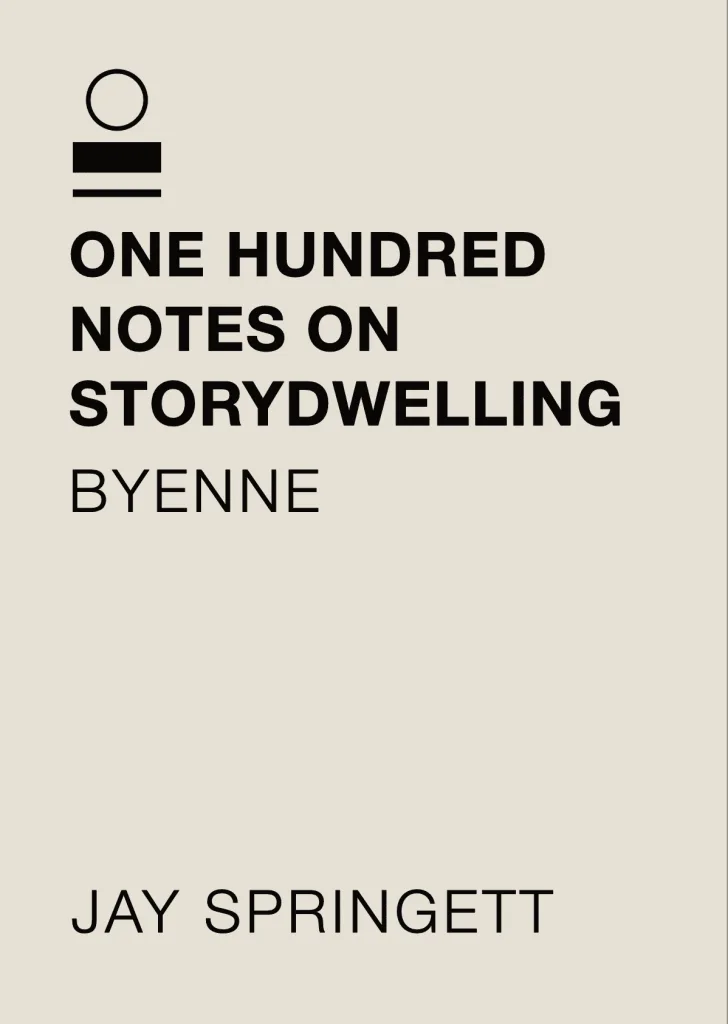
The 100 entries in the collection, to my mind actually represent a great deal more thought than the total word count. And I’m very pleased, personally, with the corpus, how it turned out.
Somewhere down the creative project priority list is collecting them together by theme, and I hope to put 100 Notes out as both a PDF and EPUB later on this year. By then I’ll have the pre-order mechanism properly set up; and If anyones interested I might do a short publishing run. Probably as an A6 artefact. The first thing from my nascent publishing label: Family of Giants.
Experience.Computer
I only managed to get two episodes of Experience.Computer out last year. Which is a shame because I still think the core concept and hook for the show is really strong.
Despite lack of consistent publishing, the shows downloads from month to month continue to be remarkably robust. Even with just those two new entries this year, the first 90-day download figures remain in line with Permanently Moved, which puts the show in the top 10% of podcasts globally. Which is a bit mad for a pet project.
Expect the sporadic posting schedule to continue through 2026. E.C isn’t a primary priority right now for me. I’ll simply record and release episodes as the opportunity arises. That said, if anyone has guest ideas or can make introductions to people who fit the show’s vibe, please feel free to reach out!
Experience.Computer 🔊
Experience.Computer is slow radio about high tech.
An interview show by Jay Springett about aphantasia, creativity, and the imagination.
The Ministry Of My Own Labour
Consulting work is always a boom bust cycle of feast and famine, and that was certainly the case again last year. So much so as we head into 2026, finding full time employment has become priority #1 in my professional life. Which I fear might be difficult given how weird and illegible I am. As it was, the pursuit of full time employment contributed to the some of the “craziness” I mentioned earlier regarding the back half of 2025.
Nevertheless, I did get some very cool things done last year some of which I can talk about:
Off Grid: Red Team
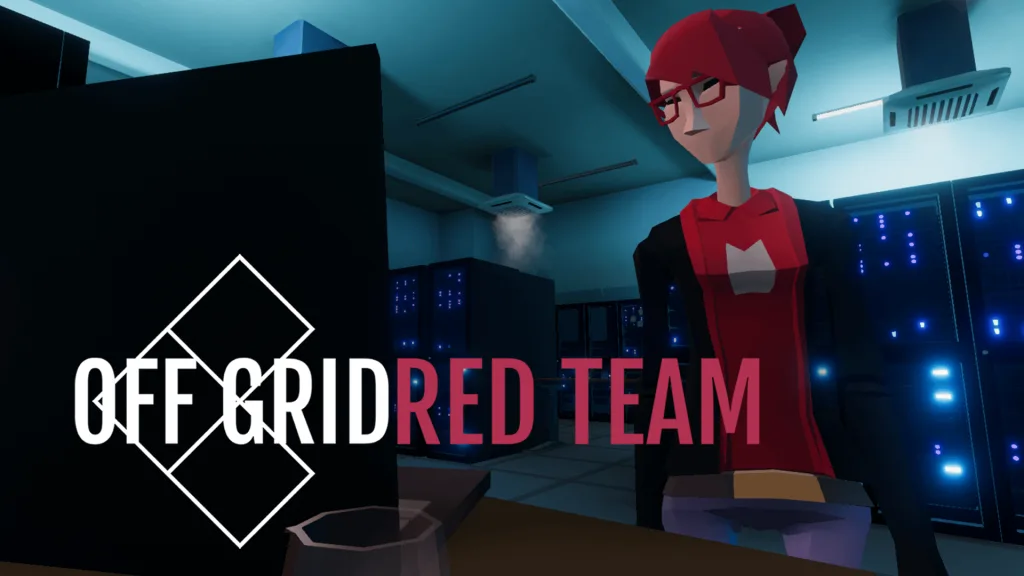
Last year saw the play-test and the completion of a full vertical slice for a cybersecurity game I produced at the award winning UK indie developer Semaeopus. A project I’m enormously proud of.
The game involves exploring a 3D world, solving puzzles, and interacting with real-world websites, requiring the player to “hack” them. Interestingly, the sites are built in hardened Python, and they appear to the user via the browser inspector as a PHP server and are vulnerable to many of the common PHP exploits.
We originally built the tool with hiring and training in mind, but once we got it into the hands of teams within the cybersecurity industry, we realised from senior leader feedback very quickly that it would be a fantastic tool for personal development and onboarding.
Developed in collaboration with cybersecurity professionals…
The game replicates real-world scenarios while maintaining an engaging, game-first experience.
During our initial testing phase, untrained players were able to progress using real websites and techniques, showcasing the game’s authentic approach. By the end of their playthrough, they had a stronger understanding of common security risks—and how even simple precautions can significantly improve the protection of personal or professional data.
The games specific focus is on teaching people to “think like an attacker” rather than just defending from one. All the puzzles and missions in our demo level align with real-world CVEs and MITRE ATT&CK statuses and in a future iteration, it could essentially cover full compliance methodologies for SOC2 etc.
The project was extremely well received, and the whole team was very happy to receive a nomination for a Serious Games Awards in Utrecht at the end of the year. We didn’t take home the trophy, but our lead designer attended the ceremony and was able to showcase the game to key figures across the serious games industry.
You can read more about it, and watch V1 of the trailer (made after the first playtests, but before the full vertical slice was complete)
The O’Ruggin Trail
![Screenshot of the O'Ruggin Trail onchain text adventure interface. A green terminal window displays: Welcome to the O'Ruggin Trail; O'RUGGIN TRAIL in blocky ASCII art; The first game built with ORuggEd onchain text adventure editor; Trail starts here, CONNECT and then LOOK AROUND to get started; type [connect] and be able to [load] games or [create] a new one.](https://thejaymo.net/wp-content/uploads/2026/01/Screenshot-2026-01-22-at-22.02.25-1024x665-png.webp)
Over at archetypal.tech this year, I helped produce The O’Ruggin Trail, a parser-based interactive fiction game built entirely on the blockchain.
A satirical interactive fiction game about survival, bureaucracy, and impossible choices. Step into the boots of a licensed Trail Guide and lead a ragged band of pilgrims, outlaws, and opportunists across a fractured wasteland toward the fortified city-state of Usants.
Building a fully functioning lexer within smart contracts was a significant engineering challenge, but we got the engine stable and fully operational in the end.
We released the first part of the four-act game and held a playtest period in the Autumn. The project picked up some great momentum, including an interview with Rich and I on the Fully Onchain Games podcast and a write-up in the Bankless newsletter.
One of the key features of this implementation is that the game instances themselves are NFTs, meaning a specific playthrough can be passed from one player to another, the full game state etc.
But the “secret sauce” and the thing I’m most proud of is that upon completing the demo (and the main game), players receive access to our own editing tools to expand the story further. You can add new rooms, objects, and puzzles, and if you have NFTs from other projects like Loot or Realms / Eternum in your wallet, you can even write your own branches from rooms based on those games.
It’s all extremely novel in the world of on-chain gaming and autonomous worlds and we have some really ambitious plans if funding is acquired.
While I’m not currently active on the project, the full version should be out sometime this year. If parser-based interactive fiction is your jam, you should check it out. Its honestly a bit of a blockchain engineering marvel, and shows the level of expertise that the Archetypal team can build/impliment.
Companions
Regular readers will have noticed I wrote a lot about ‘Little Guys’ here on the blog last year. AI companions and the history of how we got here etc. There is much more to come on this front.
For the first time, I secured a research contract that had a relatively short “dark period,” after which I was allowed to write publicly about the same topics, and I’m really grateful to said team for allowing that flexibility.
The reason this gig even came about—and this brings us back to my point in the earlier section about the value of the archive—is because I was writing about AI companions and Little Guys here on my blog in 2024.
Those posts were actually surfaced by an early ChatGPT deep research search, so I effectively got a gig last year via ChatGPT. Which I think that is incredibly cool, and a total sign of the times. It’s also definitive proof of why maintaining a blog and simply posting your ideas online can be valuable.
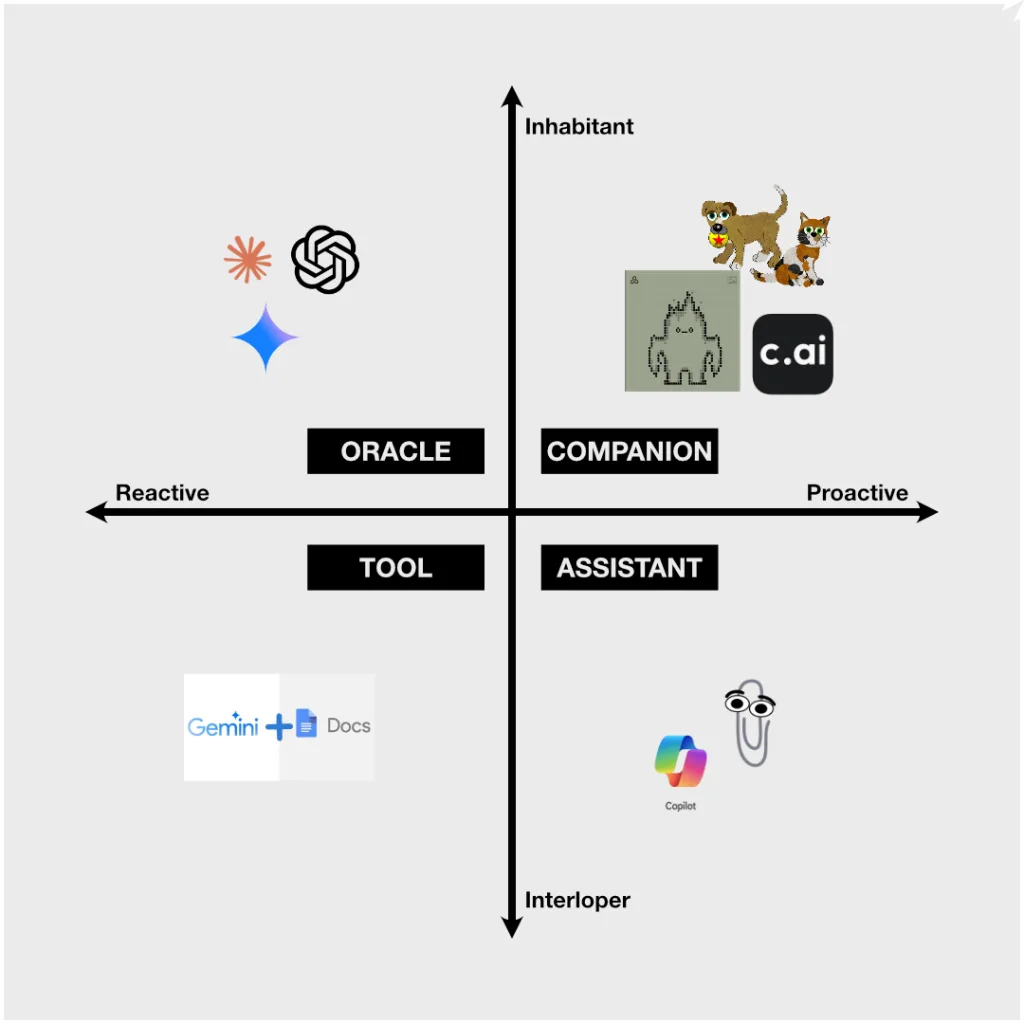
Anyway, I have plenty more to say about Little Guys and LLM companions in 2026, particularly bout ‘putting them into vessels’ and other form factors. Which leads me to another piece of work I definitely can’t talk about, but I did get to visit a robotics lab late last year to see what they were messing with.
I saw the cutting edge of soft robotics and non-humanoid form factors with agentic LLMs living inside of them and… wow. I think the people laughing at the stupid humanoid robots currently being marketed (and they are stupid) are massively under-indexing on the real state of cutting edge robotics.
I don’t expect much of this to be productised for the consumer market just yet, but it is coming. The 90s are back, baby.
Forest Bed
On a more analog note, my cosmic country / alt-folk Americana band, Forest Bed, had a good year.
We played a bunch of shows, recorded an album, put out a new single and made a music video. It even picked up a great review in Americana UK, which was a real highlight for us.
We already have several shows booked for 2026; we’ll be playing the High Tide Festival in Twickenham this summer, and we have a gig coming up very soon —we’re playing “What’s Cookin’” on the 11th of February in Leytonstone.
It feels good to have that physical, musical outlet alongside everything else and to see ‘the boys’ on the regular at band practice, without the need for the presence of alcohol to bring us together.
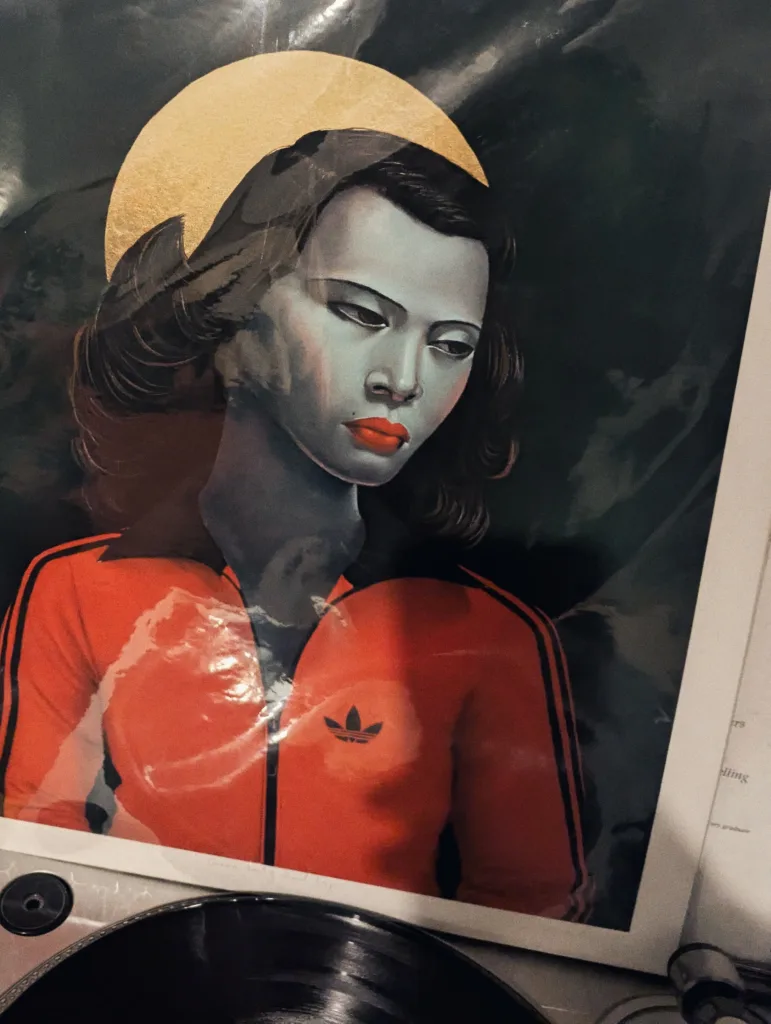
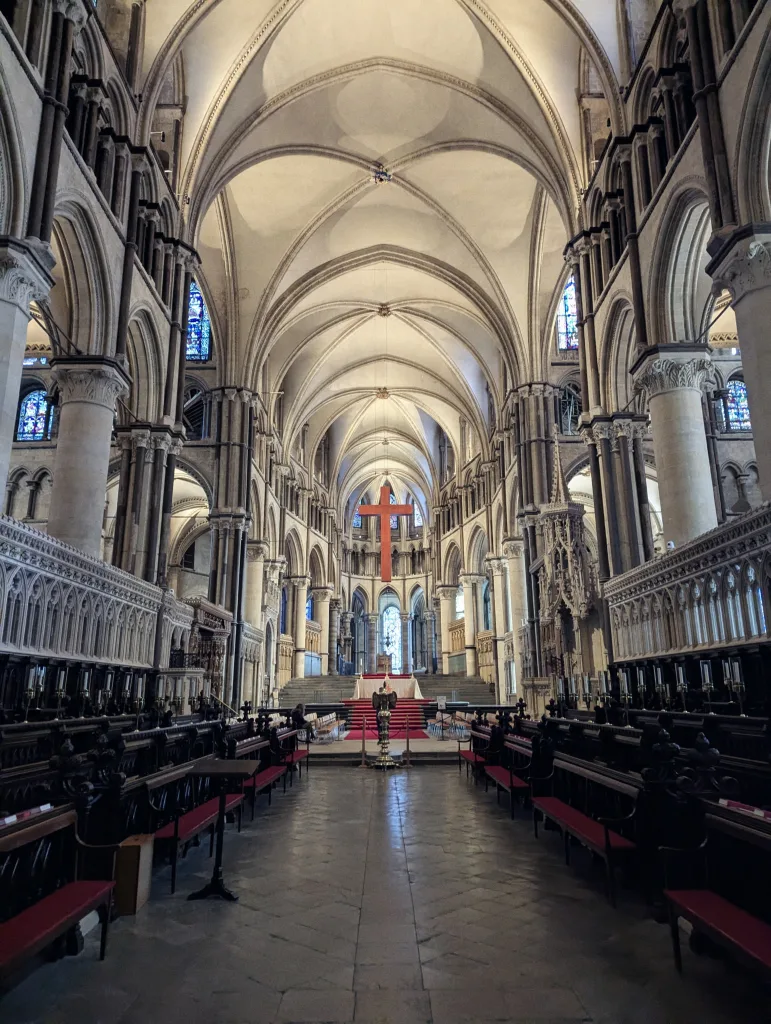
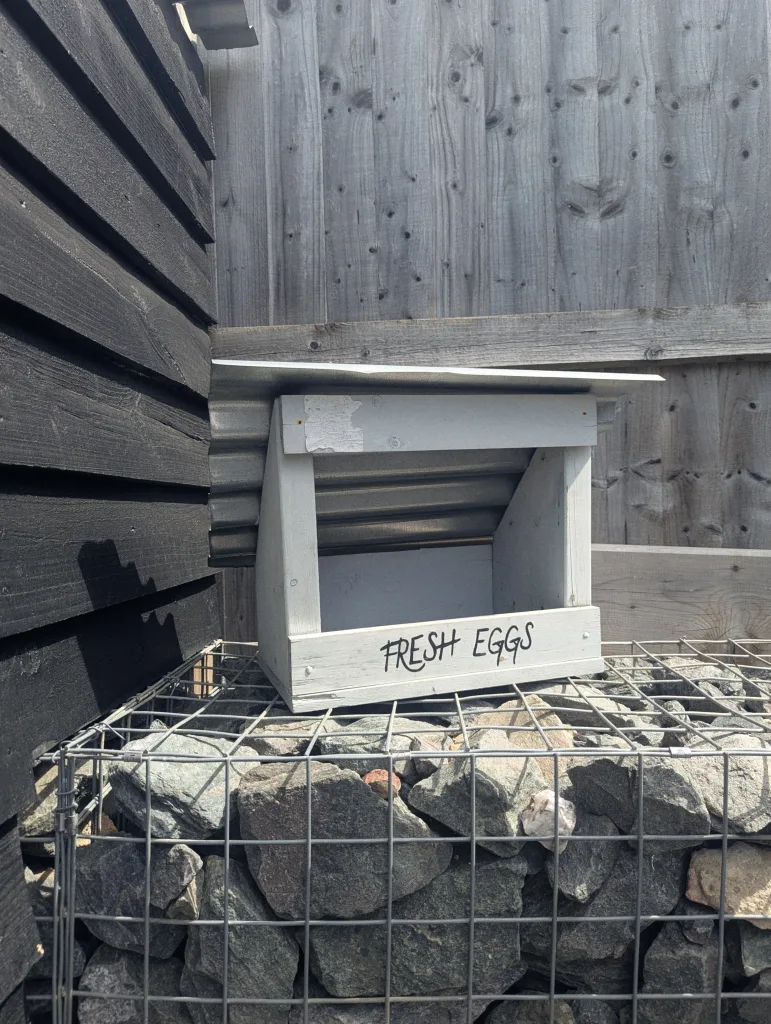
Photo 365 — Year 4
I also completed another year of my Photo 365 project. That’s four years of taking a photo every single day. I think 2026 will be the final year for this particular project; five years feels like enough, especially when I realised that five years represents roughly an eighth of my life!
Nevertheless, as is tradition here on the blog, here’s some highlights from 2025.
January
February
March

April
May
June
July
August
September
October

November
December