01 // 21st century worlds are a medium entirely new to humanity
What is World Running?
World Running, akin to show running in television, is an emerging discipline concerned with guiding and overseeing the development, maintenance, and ongoing evolution of worlds.
Worldbuilding is all the rage. But what do we do with these worlds once they have been worlded into being? How do we continue to nurture and care for them after their original creators have stepped aside?
My primary thesis: all techno-social systems should be seen through the lens of worlds. They are hybrid environments, sympathetic to the people, places, and technologies that simultaneously inhabit and constitute them.
Worldbuilding, virtual worlds, entertainment worlds, media franchises, corporate org design, theme park design, XR/VR, volumes, escape rooms, tabletop games, undirected play, very large organisations, hybrid and mixed reality storytelling — and much more besides.
World Runner was coined in 2020 by analyst Matthew Ball, in a now-deleted tweet, as a portmanteau of worldbuilder and showrunner. In time I believe the term will come to encompass a great deal more.
My own route into it merged career interest management consulting and organisational design, plus my long involvement in Solarpunk and its fandom logics, and a deep grounding in the metaverse and other worlding technologies.
World building is a hobby. World running is a vocation.

02 // The essay collection
worldrunning.guide 📘
A lightly edited collection of essays, most originally published here and on Permanently Moved since 2020, gathered into one continuously updated document.
It is a living Google Doc rather than a website, because it is a work in progress — proudly part of The Doc Web. Save it as a PDF and read it offline if you’d rather.
03 // The questions
My research is organised around 6 questions. I use them in my own work as a World Runner.
What is a world?
We know worlds when we see them. But what are they? What does it mean to build one, and what are the building blocks of a virtual space?
Who loves the world?
Worlds are nothing without the people inside them. How do we read a world, move through it, and decide what winning even means?
Who made the world?
Every world has a history and an owner. Where the metaverse came from, who has tried to sell it, and what the last land grab teaches us about the next.
What’s beyond the world?
The edges of a world, and what leaks across them. Worldviews, brainworms, presence, and the little computer people now moving in.
Who runs a world?
The discipline itself. Administration is not a dirty word — lore is a lens, bureaucracy is a technology, and someone has to hold the whole thing together.
How does a world end?
Worlds close, servers go dark, and audiences move on. Endings are part of the practice too — the last question, and the one most often ducked.
04 // Where the research goes
Two projects so far have come out the project
The Web Was a Side Quest
My first non-fiction book, and the companion project to the essay collection. It traces the long history of worlds from the origins of modernity, through Dungeons & Dragons and its influence on computers, up to the so-called Metaverse of today.
The book speculates on post-modernity, and on how the fusion of these ideas might be what computers have been for all along.
Worlds: A Walk Through is the short version, given as a talk.
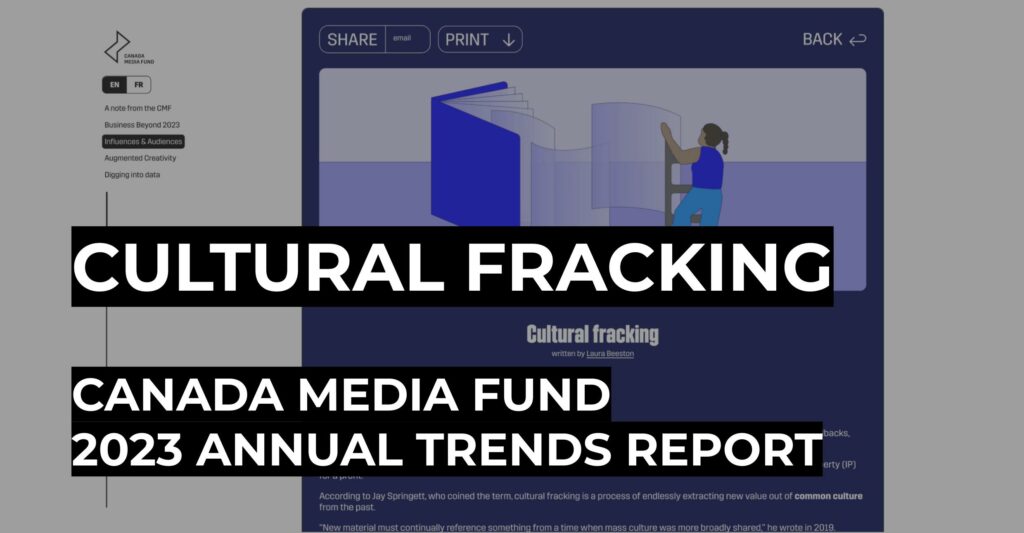
Cultural Fracking
The entertainment industry keeps drilling old intellectual property for whatever is left in it. Cohesive worlds have to be built before that practice poisons the groundwater and leaves the cultural landscape — its own property — a toxic mess.
The term has since travelled well beyond me, including into the CMF Annual Trends Report.
05 // Talks & conversations
Myth-Making Mechanisms in Autonomous Worlds
World running in a professional context: how myth accumulates in on-chain worlds, and what it takes to steward one.
Worlds: A Walk Through
Their history, done quick. The whole arc of the book in one sitting, from modernity to the metaverse.
Talking Cultural Fracking and World Running
A long conversation covering most of the territory at once: fracking, worlds, and where the two meet.
Fieldnotes from the Metaverse
An interview about what a decade of watching virtual worlds actually taught me, and what the word metaverse is still good for.

Mechanics and Worlding with Paul Czege
On solo journalling games, the mechanics that make a world habitable, and what a rulebook is really for.
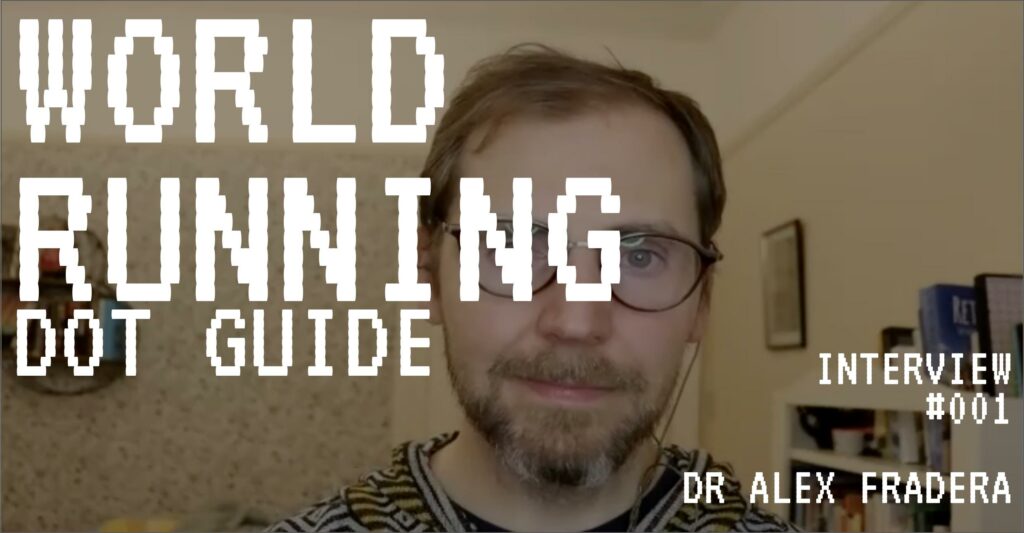
Improv and Trust with Dr Alex Fradera
How groups build a shared reality in real time, and why trust is the substrate every collaborative world runs on.
06 // the archive
-
WEEKNOTE #442
The Backrooms as Permissive IP
The Backrooms movie shows how modern myth, world literacy, and permissive IP can produce culture that Hollywood can only arrive at later.
-
 WEEKNOTE #438
Jubensha Con
On Saturday I went to Jubensha Con 2026. The first english language convention about the Chinese social phenomenon of Jubensha.
-
Post
Thinking Inside Out
An introduction to three essays on agent environments, worlds, and ontological hardness.
-
Post
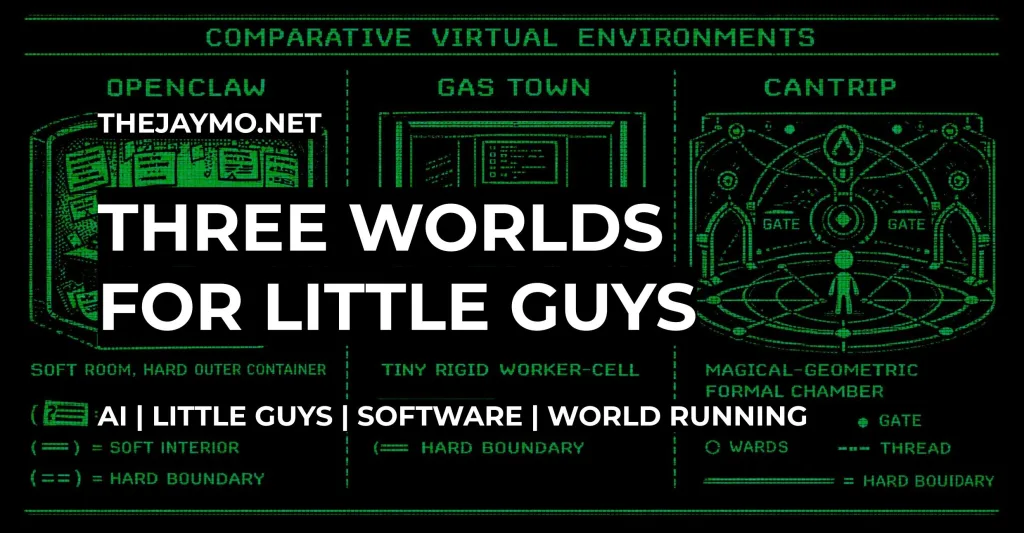
Three Worlds for Little Guys
OpenClaw, Gas Town, and Cantrip through the lens of ontological hardness
-
Post
Hard Worlds For Little Guys
Why LLM agents need hard worlds; lessons from interactive fiction engine design.
-
Post
Ontological Hardness
Why the first question about agent failure should be about the world, not the model
-
WEEKNOTE #395
Playability
One of things happening in culture that I think we can all feel intuitively is that increasingly media mediums are playable.
-
Post
AI UX: Pixel Agents, Talking Cars, and Moving Eyes
An exploration of AI companions, personified agents, and how virtual worlds and hardware interfaces are reshaping human-AI relationships.
-
 EPISODE #2508
Leaving Worlds Behind | 2508
To run a world is to be responsible for its edges as much as its centre.
-
WEEKNOTE #377
Game Definitions
Rather than focusing on ‘Games’, Laas instead focuses on their definition and how *they* work in different ways to achieve certain ends.
-
Post
Without You, Patchwork is Nothing
In 1980, Frank Herbert envisioned the ‘author’s computer’ as a tool for organizing creativity and storytelling. Decades later, Patchwork, a collaborative worldbuilding app, brings…
-
Post
Fieldnotes from the Metaverse | Interview
I was recently interviewed by Dirk Songuer for his book: Fieldnotes from the Metaverse which “documents the history, perspectives, and narratives of the metaverse”…
-
Post
Yaelokre’s Meadowlark | World Running
The artist Yaelokre released a new song recently, and the buzz around it online prompted me to write about their work—or rather, their world—as…
-
Post
WalkCast.FM
Took a walk with WalkCast today. A location-based app that creates live audio narratives. Here’s where it shines and where it could improve
-
EPISODE #2425
NotebookFM | 2425
I’m sorry. I’ve made some slop. But only because I really wanted to be a guest on my newest favourite podcast..
-
EPISODE #2419
Shaping Thought | 2419
The games designer seeks to influence the structure of thought. Manipulating the kinds of thoughts the player thinks while playing the game.
-
Post
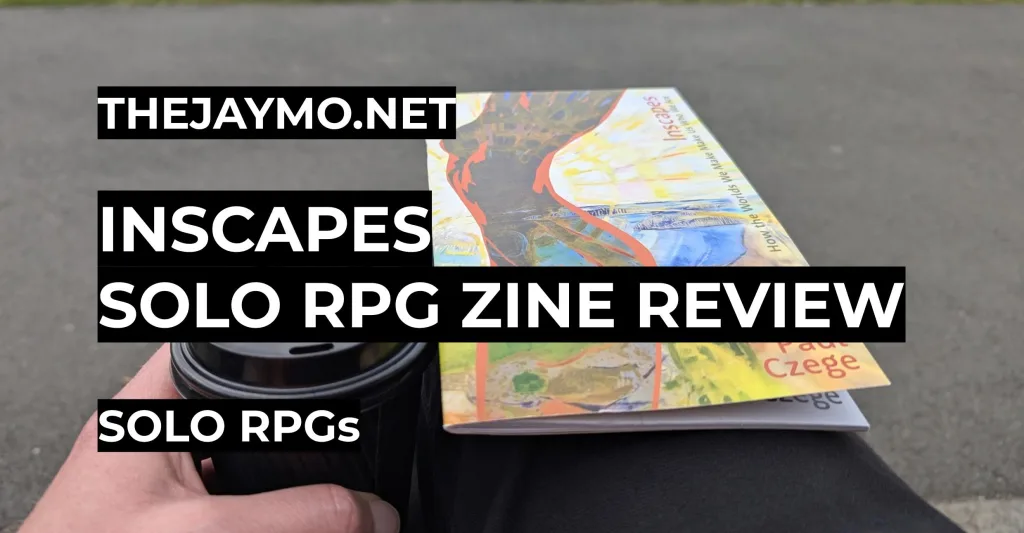
📃 Inscapes | Solo RPG Zine Review
Paul Czege was kind enough to send me a review copy of his newest zine, Inscapes: How the Worlds We Make Make Us Who…
-
EPISODE #2414
The Origins of Modern Bureaucracy | 2414
| Where did modern bureaucracy come from? Colonel Sylvanus Thayer, the Father of the Military Academy, or the ‘man who made West Point’. Full…
-
EPISODE #2411
Little Computer People | 2411
Right now AI is the worst it’s ever going to be. It costs about £60 a day to house a little computer person powered…
-
Post
One D&D, Two Covers
The two images illustrate the fundamental split over what players think Dungeons & Dragons is for
-
EPISODE #2407
Going Deep | 2407
Tetris players have gone so deep, and become such powerful wizards, that they can avoid the end of the world.
-
EPISODE #2405
Little Wars of the Worlds | 2405
A review of HG Wells’ Little Wars. The book that changed the way tabletop wargames were played, and paved the way for the development…